Nevada, U.S.A 30x40m polycarbonate deprivation greenhouse
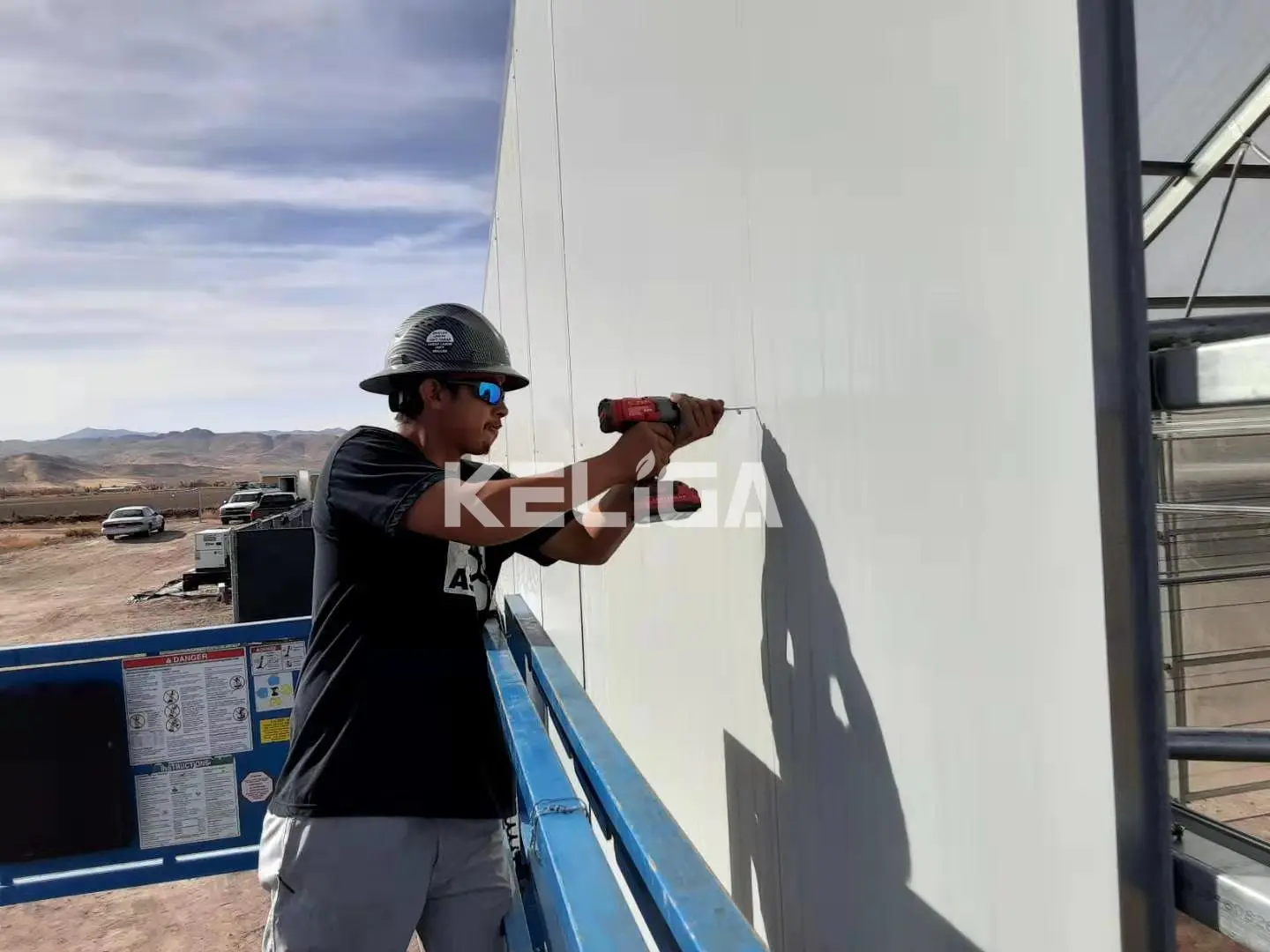
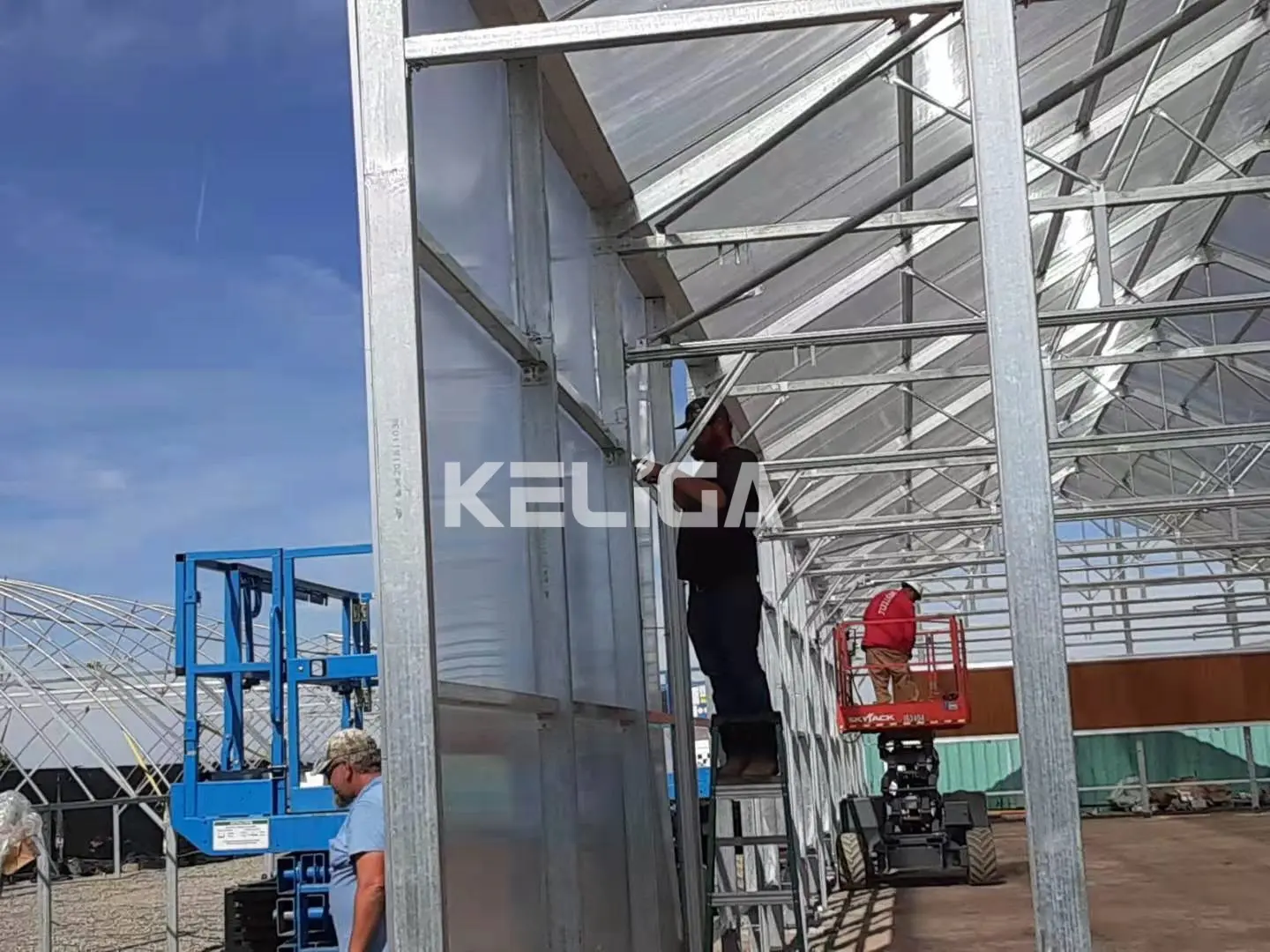
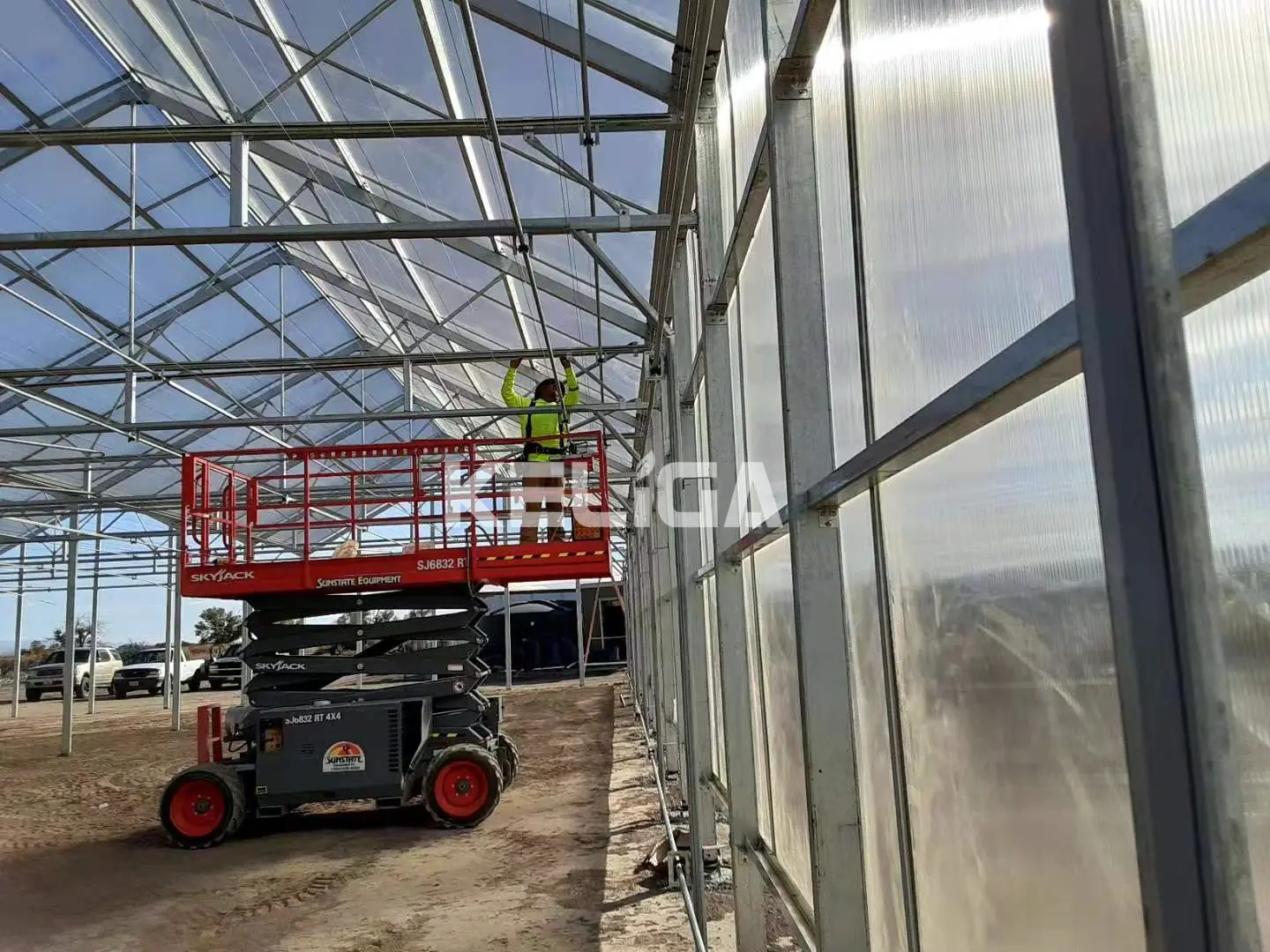
The technician for supervision installation in Nevada takes two months, with the client responsible for arranging flights and accommodation.
30m x 40m Polycarbonate Light Deprivation Greenhouse (8mm Twin‑Wall) – Nevada, USA
Project Overview
This 30m(W) x 40m(L) (1,200m²) greenhouse in Nevada, USA uses 8mm twin‑wall polycarbonate – a cost‑effective, lightweight glazing for mild‑winter / high‑desert climates. Designed for photoperiod‑sensitive crops (cannabis, herbs), it delivers reliable year‑round production.
Nevada Climate & 8mm Suitability
Nevada has intense sun, 110°F+ summer highs, -10°F winter nights, low humidity and strong winds. Southern Nevada has negligible snow; 8mm panels provide good insulation (R~1.6) and high light transmission (≈82%). For northern sites with snow, a 16mm upgrade is recommended.
Main Frame
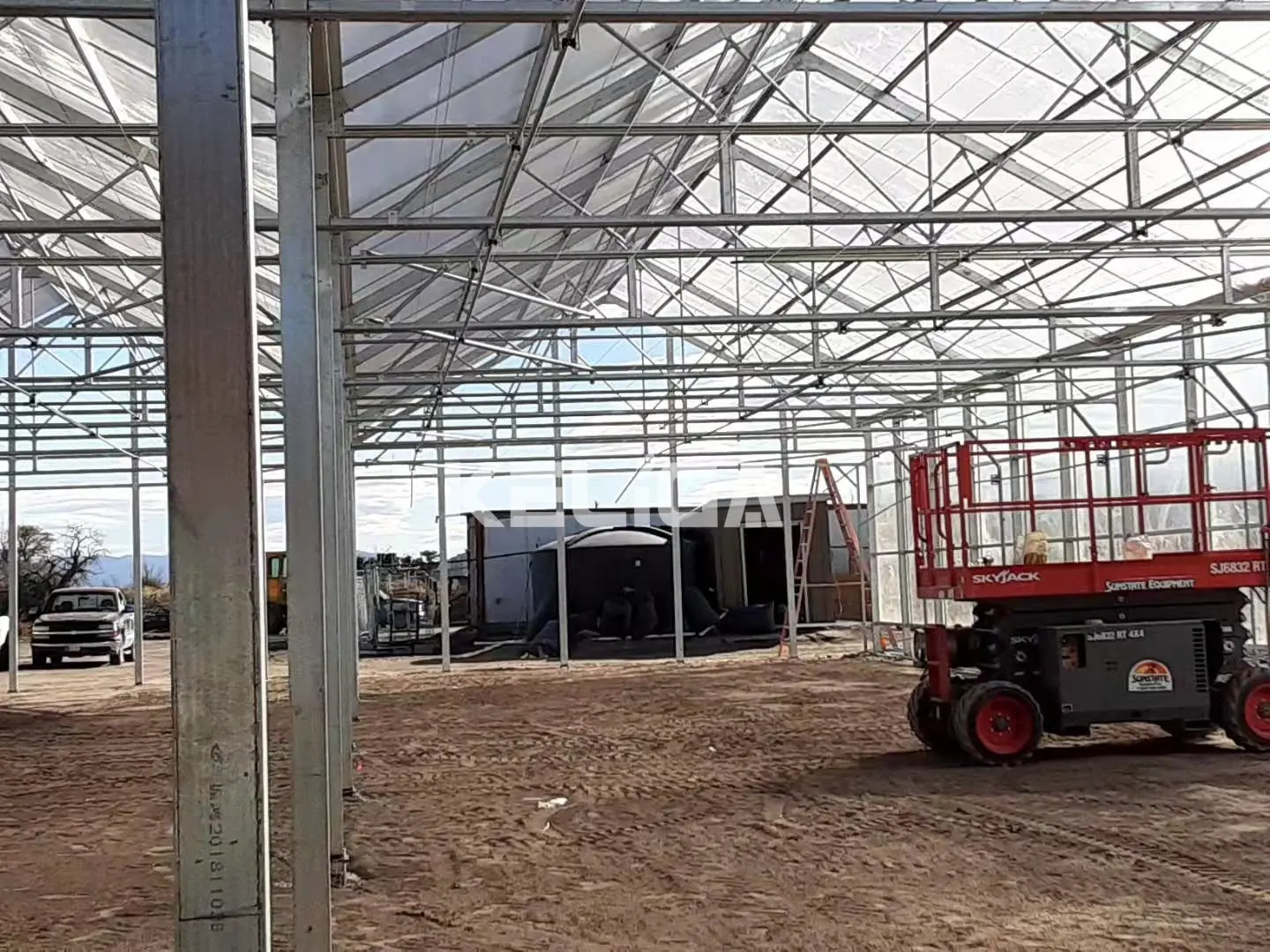
100x50x2.5mm hot‑dip galvanized (Z275) rectangular steel tubing. The heavy 2.5mm wall resists wind and thermal stress. Bolted connections with locknuts prevent loosening. Diagonal X‑bracing at gable ends distributes lateral forces across the 30x40m plan.
8mm Twin‑Wall Polycarbonate Cladding
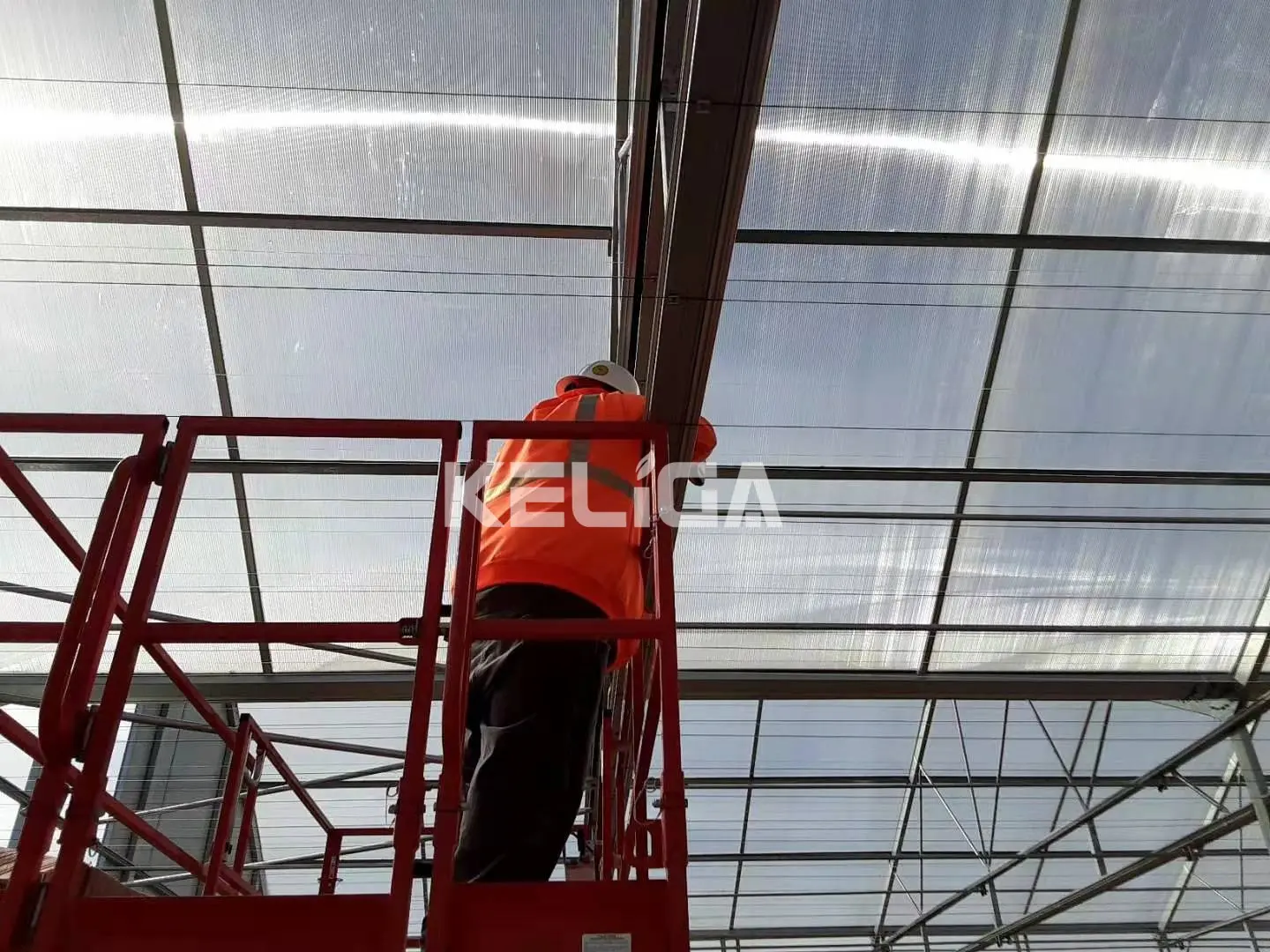
Enclosed with 8mm twin‑wall polycarbonate – two layers with air cavities. Light transmission ≈82%, diffused to eliminate hotspots. Impact resistant (hail, debris). UV‑coated for desert sun. Lower cost than thicker panels, ideal for Nevada’s low‑snow areas.
Light Deprivation System
External automated blackout curtain achieves <0.1% light transmission. Simulates complete darkness to induce flowering on demand. Enables 5‑6 harvests/year. Motorized rack‑and‑pinion drive ensures smooth operation even in Nevada’s winds.
Internal Shading System
Dual‑function reflective screen under the polycarbonate roof. Summer: reflects solar heat, lowers interior temperature by 5‑8°C. Winter: traps rising warm air, cuts night heating demand by 30‑40%. Fire‑retardant fabric, independently controlled.
Rack‑&‑Pinion Ventilation
Galvanized steel rack‑and‑pinion actuators open continuous ridge vents (0‑60°). No jamming or cable slack. Combined with motorized roll‑up side curtains – natural convection exhausts hot air and draws cool air, reducing fan energy use.
Light Trap System (Blackout Baffles)
Aluminum zigzag light traps at all ventilation intake/exhaust points. Block external light when blackout curtains close – no pinhole leaks. Prevents hermaphroditism in cannabis. Allows full airflow while maintaining absolute darkness.
Keliga Aluminum Heating System
Aluminum hot‑water pipe‑rail heating along perimeter and crop rows. Faster thermal response than steel – cuts energy waste. Maintains 15°C+ root‑zone even when outside drops below -10°C. Essential for Nevada’s cold winter nights.
Evaporative Cooling System
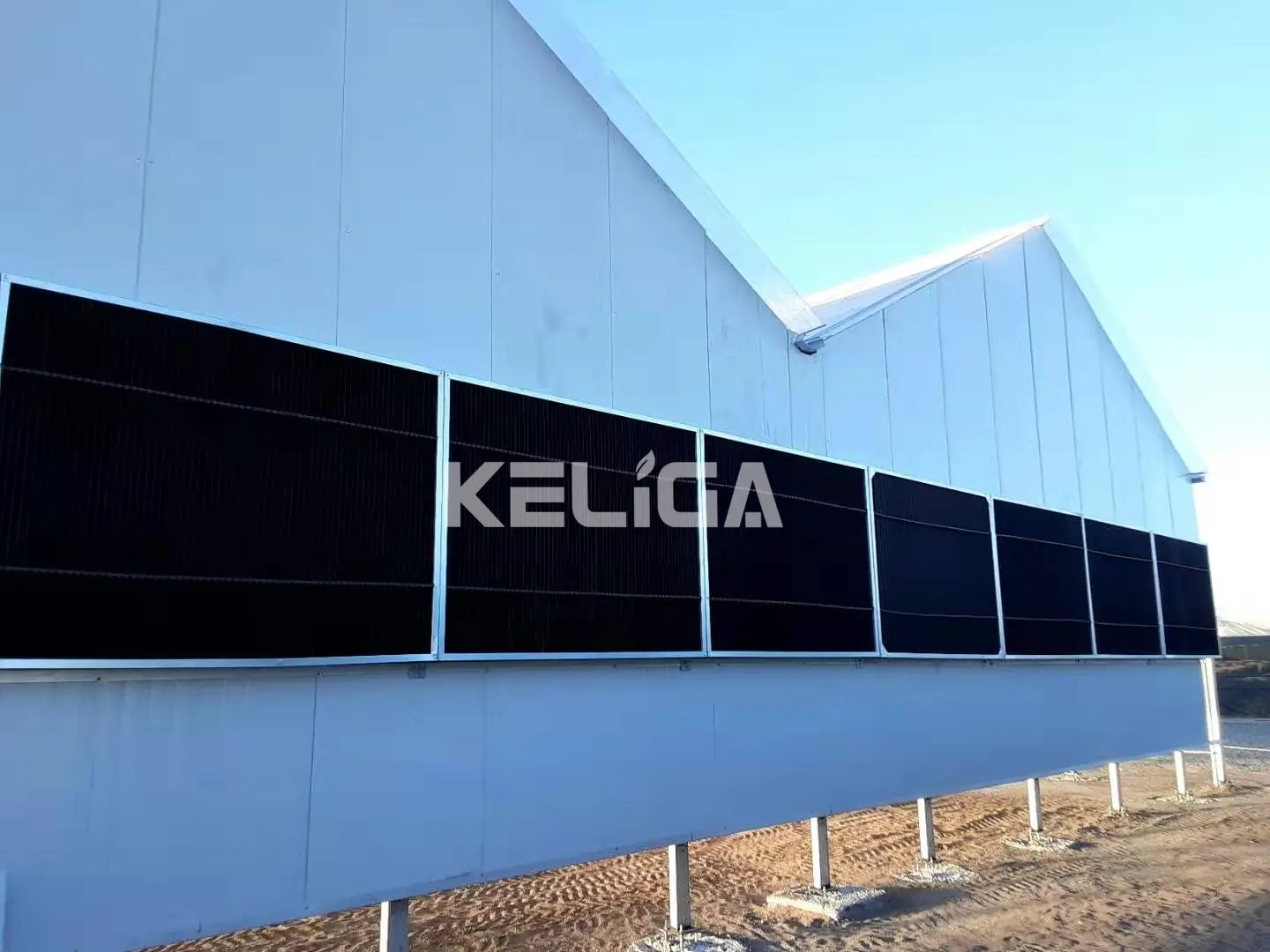
Fan‑and‑pad evaporative cooling leverages Nevada’s dry air for high efficiency – interior temperatures 10‑15°C below outdoor ambient. Protects crops from flower abortion and sunscald during 110°F+ summer days. Integrated with side/roof vents.
| Parameter | Specification / Design Feature |
|---|---|
| Project Location | Nevada, USA (high desert climate; intense sun, 110°F+ summer highs, -10°F winter nights, low humidity, strong winds) |
| Dimensions | 30m (W) x 40m (L) = 1,200 m² total growing area |
| Main Frame | 100x50x2.5mm hot‑dip galvanized rectangular steel (Z275 coating); bolted connections with locknuts; diagonal X‑bracing at gable ends |
| Cladding Material | 8mm twin‑wall polycarbonate (sunlight board); UV‑coated; ≈82% light transmission; diffused light eliminates hotspots; impact resistant |
| Light Deprivation System | External automated blackout curtain; <0.1% light transmission; motorized rack‑and‑pinion drive; enables 5‑6 harvests/year |
| Internal Shading System | Dual‑function reflective shade screen (fire‑retardant); summer: reflects solar heat (lowers interior 5‑8°C); winter: traps warm air (cuts night heating 30‑40%) |
| Ventilation System | Rack‑and‑pinion actuated continuous ridge vents (0‑60° opening) + motorized roll‑up side curtains; natural convection reduces fan energy |
| Light Trap System (Blackout Baffles) | Aluminum zigzag light traps at all intake/exhaust points; block external light when blackout closed; prevent pinhole leaks; allow 100% airflow |
| Heating System | Keliga aluminum hot‑water pipe‑rail heating (perimeter + crop rows); faster thermal response than steel; maintains 15°C+ root‑zone at -10°C outside |
| Cooling System | Fan‑and‑pad evaporative cooling; leverages Nevada’s low humidity for 10‑15°C below ambient; protects against 110°F+ heat |
| Wind Load Design | Engineered to local code (e.g., 110 mph gust); frame and bracing resist high desert winds |
| Snow Load | Negligible for Southern Nevada; optional upgrade for Northern NV sites if required |
| Gutter Height | 4–6 meters (adjustable based on crop type) |
| Column Spacing | 4 meters (typical multi‑span layout) |
| Year‑Round Performance | Consistent premium yields 12 months/year; combines 8mm diffuse light, blackout control, natural ventilation, heating, and evaporative cooling for Nevada’s extreme climate |
R&D Focus Areas
We focus on several core R&D areas, dedicated to solving key direction challenges in the energy storage sector.

Our Process
Steps to Your Greenhouse
1. Consult
We begin with a personalized consultation to capture your vision and needs.
2. Design
Our experts craft a detailed plan with eco-friendly practices for your approval.
3. Execute
Our skilled team transforms your space with precision and care.

The Goal
Our Mission
To transform outdoor spaces into beautiful, functional, and sustainable environments that enhance our clients’ lifestyles while respecting the natural world. We are committed to delivering exceptional service and innovative solutions through our passion for gardening and landscaping.
The Outlook
Our Vission
To be the leading provider of eco-friendly gardening and landscaping services, inspiring communities to embrace sustainable practices and appreciate the beauty of nature in their everyday lives. We envision a future where every outdoor space reflects harmony between human creativity and the natural environment.