Arch plastic greenhouse

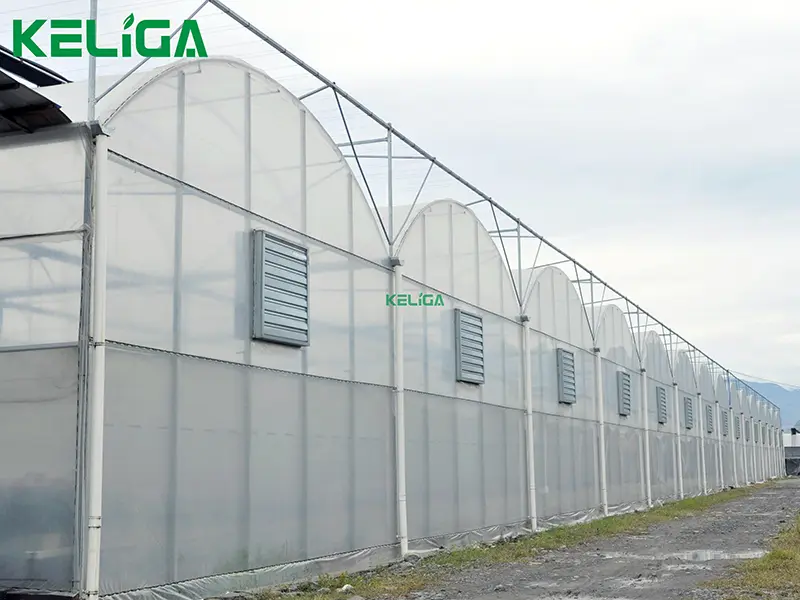
Arch plastic greenhouse is a greenhouse with frame structure and plastic film covering.

It features a curved, arched frame, usually made of metal or plastic, that provides stable support and strength. The membrane covers the arched frame and can be a clear or translucent plastic material such as polyethylene. This type of greenhouse provides insulation, light protection, and moisture retention to help protect plants from harsh weather conditions.

  • The design of Arch plastic greenhouse usually adopts arch structure, which helps to concentrate and evenly distribute the weight, provide good wind resistance, and reduce the load of snow accumulation. The arched structure also maximizes the use of sunlight, providing ample natural light and heat to promote plant growth and development.
  • Arch plastic greenhouse has a wide range of applications in agriculture and horticulture. They can be used for seedlings, growing vegetables, growing flowers, plant research and flower displays, etc.
  • Compared with traditional glass greenhouses, Arch plastic greenhouses have lower construction and maintenance costs, and are also more flexible and easier to install. In addition, plastic films also have the characteristics of UV resistance and weather resistance, and can meet the needs of different regions and seasons.
  • Overall Cost Summary


    Component CategoryBasic (USD/m²)Standard (USD/m²)Premium (USD/m²)Notes
    Structure (Frame + Cover)$5–15$15–30$30–50+Single-span basic to multi-span commercial
    Irrigation System$0.5–2$2–5$5–15Drip to fully automated fertigation
    Ventilation (Passive)$0.5–2$2–4N/ARoll-up side curtains + roof vents
    Cooling (Fan & Pad)N/A$10–15$15–25Only for hot climates
    Heating SystemN/A$5–15$15–30+Hot air blower to hot water piping
    Shading System$2–4$5–10$10–20External or internal shade screens
    Automation/Basic Controls$2–5$10–25$25–75+Manual to PLC/smart control
    Hydroponic SystemOptional$10–25$25–50+NFT, DWC, or substrate systems
    Installation Cost$2–5$5–10$10–20+Local labor; varies by country
    TOTAL TURNKEY$15–35$40–80$100–150+Complete operational greenhouse
Category Data/Materials
Structure Type Arched plastic greenhouse
Greenhouse Length Usually between 10 meters and 100 meters, can be adjusted according to needs
Greenhouse Width Usually between 6 meters and 12 meters, can be adjusted according to needs
Greenhouse Height Usually between 2.5 meters and 4 meters, can be adjusted according to needs
Structural Materials • Steel frame: usually galvanized steel pipe or aluminum alloy
• Covering material: Polyethylene film with good weather resistance
Internal Facilities • Automatic ventilation system
• Irrigation system
• Heating system
• Lighting system
• Control system…
Greenhouse Features • Arch design provides good space utilization and structural stability
• The automatic ventilation system can automatically adjust the ventilation volume according to the temperature difference between the inside and outside of the greenhouse.
• Suitable for growing crops that require good ventilation and light, such as vegetables, flowers, etc.
• Provide good environmental control, which is conducive to the healthy growth of crops
Summary Arch plastic greenhouse is a simple, economical and efficient greenhouse design that can provide a good planting environment, promote plant growth and increase yield.
Cost-Effective Arch Plastic Greenhouse for Small Family Flower Farms Around the World

Uzbekistan – 50,000 m² Arch Plastic Greenhouse Project

Project Background: Uzbekistan has prioritized greenhouse expansion to reduce food imports and achieve agricultural self‑sufficiency. Under its 2021–2027 policy framework, the government plans to add more than 2,000 hectares of greenhouse space, with support from the FAO and public‑private partnerships for small‑ and medium‑scale farmers. Project Goals: Strengthen food security by enabling year‑round cultivation of tomatoes, cucumbers, bell peppers, and leafy greens. Improve water efficiency in the arid climate through integrated drip irrigation. Reduce post‑harvest losses and stabilize seasonal supplies. Technology & Implementation: This 50,000 m² project features a multi‑span arch design using 180–200 μm UV‑resistant PE film, which reduces indoor condensation and extends service life to 5+ years. The greenhouse is equipped with a drip irrigation system (water pumps, filters, storage tanks, and drip lines) that delivers soluble nutrients directly to plant roots, significantly increasing water‑use efficiency. Rolling side curtains and roof vents provide passive ventilation and temperature regulation. The Chinese contractor introduced double‑layer film technology to enhance insulation during winter, while Uzbek scientists have collaborated to pilot smart nanofilm technology that can reduce heating energy consumption by up to 80% in this climate zone. Project scale: 50,000 m² of net cultivation area Commodities: High‑value vegetables (tomatoes, cucumbers, peppers) Key partners: FAO, Chinese government’s Belt and Road Initiative, local agricultural cooperatives Timeline: Completed 2023–2024 Investment range: US$10–15 per m²(basic PE film structure)
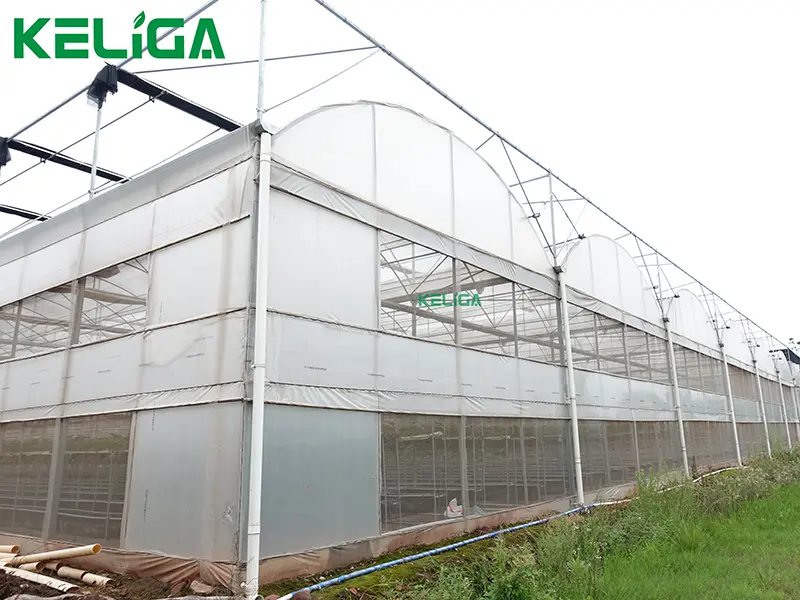
Reinforced Heavy-Duty Arch Plastic Greenhouse for Global Windy and Snowy Highland Regions

Middle East – 60,000 m² Arch Plastic Greenhouse Project

Project Background: The Middle East region faces extreme summer heat, water scarcity, and heavy reliance on food imports. Driven by national food security strategies, the UAE and Saudi Arabia are aggressively expanding controlled‑environment agriculture. The GCC greenhouse market is projected to grow from US$126 million in 2025 to US$254 million by 2032 in the UAE, and from US$198 million to US$413 million in Saudi Arabia over the same period. A memorandum of understanding was signed in 2020 to build and operate high‑tech hydroponic greenhouses of exactly this scale. Project Goals: Establish a commercially viable model for plastic‑greenhouse farming under extreme summer heat (ambient 45–50°C). Demonstrate that arch plastic greenhouses can achieve cost recovery within 2–4 years with an annual profit margin of 15–25%. Reduce reliance on imported fresh produce while conserving scarce fresh water. Technology & Implementation: To combat high temperatures, the greenhouses incorporate two critical innovations: a specialized IR‑blocking polymer film embedded with nanotechnology, which reduces internal temperatures by up to 7 °C without sacrificing light transmission; and fan‑and‑pad evaporative cooling systems that maintain daytime temperatures 10–15 °C below ambient. The steel frame is hot‑dip galvanized to resist corrosion from high humidity and salinity. Drip irrigation is combined with closed‑loop fertigation to minimize water loss, while automated side curtains and ridge vents improve air circulation. Project scale: 60,000 m², multiple greenhouse modules Technology highlights: Nano‑coated IR‑blocking films, fan‑and‑pad cooling, closed‑loop fertigation Key partners: NADEC (National Agricultural Development Company, Saudi Arabia), Pure Harvest Smart Farms (UAE), Dutch greenhouse engineering firms Timeline: Phased completion 2021–2025 Investment range: US$20–50 per m²(film + cooling systems + irrigation)
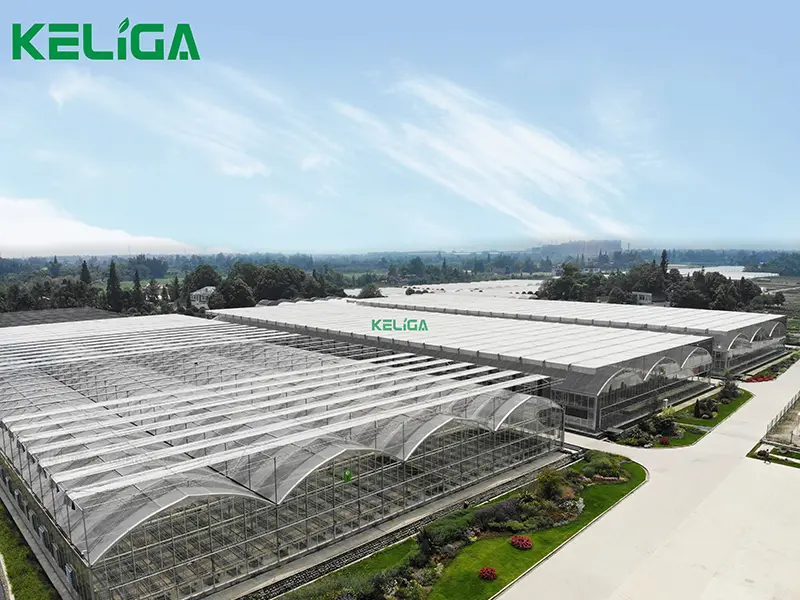
Customized Arch Plastic Greenhouse Project for Global Sightseeing and Ecological Agricultural Parks

China – 200,000 m² Arch Plastic Greenhouse Project

Project Background: China is the world’s largest producer and consumer of greenhouse vegetables. By 2025, the country’s greenhouse area surpassed 560,000 hectares, representing over 35% of the global total, and plastic film greenhouses remain the most widespread and economically accessible type. Modern arch plastic greenhouses are increasingly used to replace aging bamboo‑and‑film structures with standardized, multi‑span steel frameworks. Project Goals: Establish a large‑scale, replicable model for high‑yield vegetable production under film covering. Integrate automated irrigation, fertigation, and climate control to reduce labor costs. Serve as a demonstration base for technology transfer to domestic and international markets. Technology & Implementation: The greenhouse features a multi‑span arch design with double‑layer inflated PE film, which provides superior thermal insulation while reducing condensation. The steel framework is hot‑dip galvanized for a service life exceeding 15 years. The project includes automated drip irrigation, fan‑and‑pad cooling, and digital sensors for real‑time temperature and humidity monitoring. It primarily cultivates tomatoes, cucumbers, bell peppers, and strawberries in a soilless hydroponic system. China’s advanced manufacturing base enables significant economies of scale; the unit cost for multi‑span arch greenhouses in the Chinese domestic market falls in the range of US$10–20 per m², depending on equipment configuration. Project scale: 200,000 m² (across multiple phases) Commodities: Tomatoes, cucumbers, bell peppers, strawberries Key partners: Chinese provincial government agricultural modernization programs, leading domestic manufacturers Timeline: First phase completed 2020, ongoing expansion Investment range: US$10–20 per m²(basic kit to mid‑grade equipment)

R&D Focus Areas

We focus on several core R&D areas, dedicated to solving key direction challenges in the energy storage sector.

Low Initial Investment

Arch plastic greenhouses have the lowest capital cost among all permanent greenhouse types. Depending on the film quality and frame material (galvanized steel vs. bamboo), costs range from US$10 to US$25 per m², making them accessible for smallholders and large commercial farms alike.

Excellent Light Transmission

Polyethylene (PE) films transmit 85–92% of photosynthetically active radiation (PAR), which is higher than polycarbonate panels (80–90%) and comparable to single-pane glass. This maximizes crop growth potential, especially important during winter or in low-light regions.

Superior Ventilation & Cooling

The continuous roof ridge and roll-up side curtains provide natural “chimney effect” ventilation, effectively exhausting hot air in summer. This passive cooling is essential in hot climates like the Middle East and Central Asia, reducing or eliminating the need for mechanical cooling.

Effective Climate Buffering

Despite the simple design, a properly oriented arch greenhouse can raise internal temperatures by 5–15°C above ambient during cold nights, extending growing seasons. Double-layer inflated films can reduce heat loss by 30–40%, enabling winter production in temperate zones.

Easy Maintenance & Repairability

Film covers are replaceable (every 3–5 years for standard PE, up to 8 years for UV-stabilized films). Damaged sections can be patched quickly at low cost. Galvanized steel frames require minimal maintenance and have a service life of 15–20 years.

Environmentally Friendly

Compared to glass or polycarbonate greenhouses, arch plastic structures:

Use less steel and no glass (lower embodied energy)

PE film can be recycled (though currently underutilized)

Enable year-round local production, reducing food transportation carbon footprint

Lower energy needs for heating/cooling due to efficient passive design

R&D Focus Areas

We focus on several core R&D areas, dedicated to solving key direction challenges in the energy storage sector.

Our Process

Steps to Your Greenhouse

1. Consult

We begin with a personalized consultation to capture your vision and needs.

2. Design

Our experts craft a detailed plan with eco-friendly practices for your approval.

3. Execute

Our skilled team transforms your space with precision and care.

Coconut growing (1)

The Goal

Our Mission

To transform outdoor spaces into beautiful, functional, and sustainable environments that enhance our clients’ lifestyles while respecting the natural world. We are committed to delivering exceptional service and innovative solutions through our passion for gardening and landscaping.

The Outlook

Our Vission

To be the leading provider of eco-friendly gardening and landscaping services, inspiring communities to embrace sustainable practices and appreciate the beauty of nature in their everyday lives. We envision a future where every outdoor space reflects harmony between human creativity and the natural environment.

Contact US

Contact us today to schedule a consultation or to learn more about our services.
Scroll to Top