Arch Polycarbonate Greenhouse: A Comprehensive Overview
Definition and Structural Characteristics
An arch polycarbonate greenhouse is a semi-cylindrical or bow-shaped cultivation structure featuring a framework of evenly spaced metal arches (typically galvanized steel or aluminum), covered with polycarbonate (PC) sheets as the primary glazing material. The arch design allows the polycarbonate panels to be laid continuously, minimizing joints and material waste compared to traditional gable-style greenhouses.
The structural deployment varies significantly by scale and application:
Single-span model: Common in hobby gardens and small-scale retail greenhouses, usually built as a standalone unit with a simple arch frame.
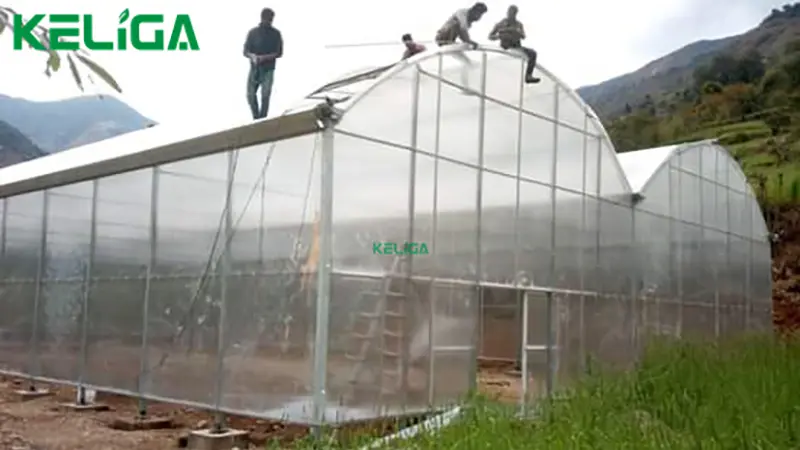
Multi-span (gutter-connected) model: Deployed in commercial agriculture, where multiple arch spans are joined side by side via gutters to form a large contiguous growing area. This configuration maximizes space utilization, facilitates mechanized crop management, and enables centralized climate control across the entire facility.
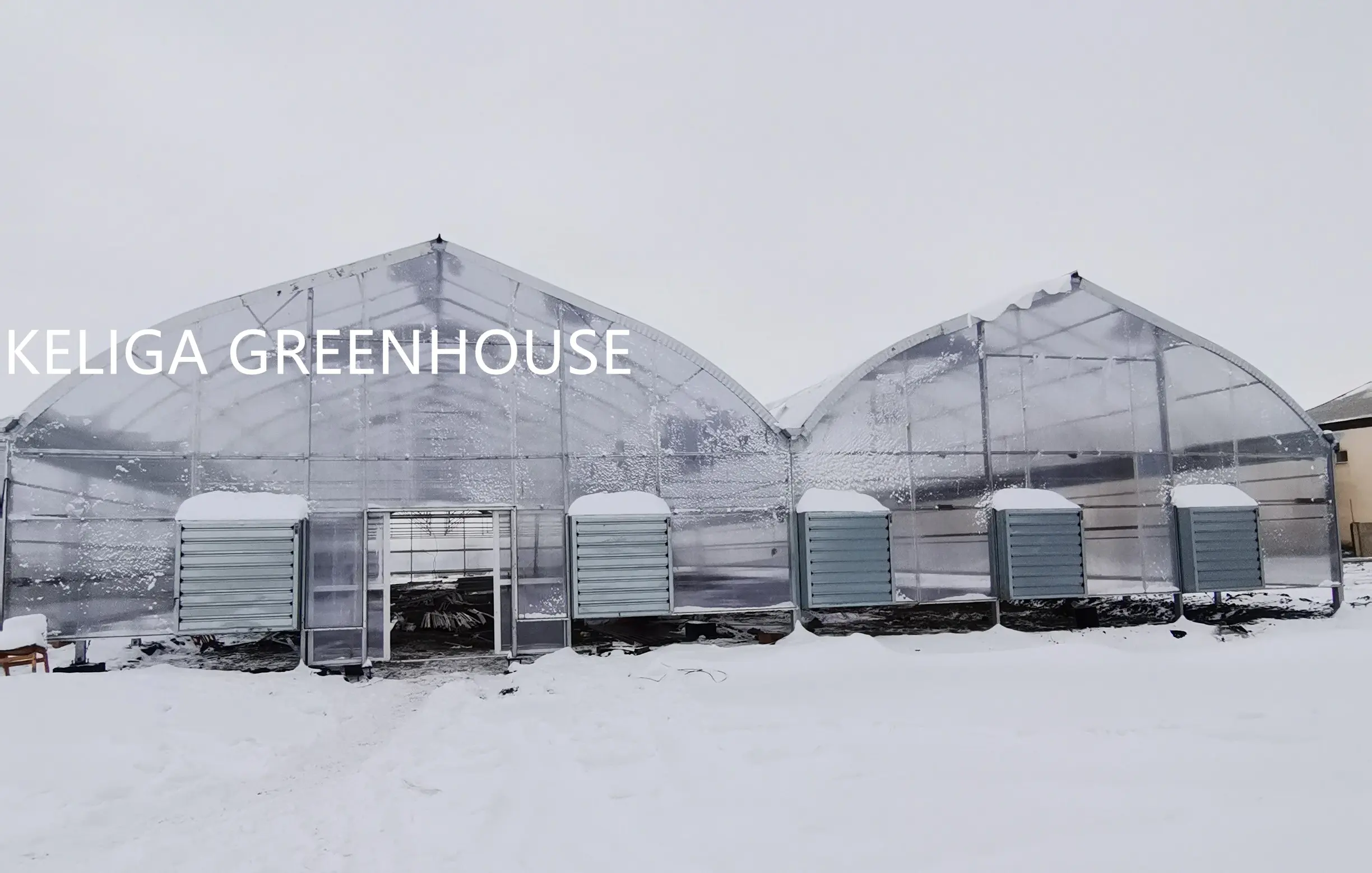
Unlike peaked or “A-frame” greenhouses, the arch configuration distributes load forces more evenly across the structure, benefiting snow shedding and wind resistance when properly designed. However, in regions with heavy snow accumulation, manual removal may still be necessary if the arch profile does not have a sufficiently steep slope.
Polycarbonate itself—a high-performance thermoplastic—offers unique engineering advantages for greenhouse applications: it is lightweight, impact-resistant, and provides superior insulation compared to single-layer glass. PC panels are available in multiple configurations: single-layer (up to 90% light transmission), double-wall/twin-wall (approximately 80–85% transmission, R-value ~1.5–2.0), and multi-wall (approximately 75–80% transmission, R-value up to 2.5+).
Advantages of Arch Polycarbonate Greenhouses
1. Structural Strength and Weather Resilience
The arch shape, combined with polycarbonate glazing, provides significant structural advantages. An arched polycarbonate greenhouse is stronger under snow load than ordinary glass because the material is bent and mechanically stressed, creating a natural load-bearing profile. The Arch-style design (particularly the Gothic arch variant) improves airflow and structural integrity, effectively shedding snow and preventing water pooling. This makes it well-suited for regions with moderate snow loads.
2. Lightweight and Ease of Assembly
Polycarbonate sheets are substantially lighter than glass, which simplifies transportation, handling, and installation. The arch design allows more economical use of polycarbonate—sheets are laid continuously, reducing the number of joints and thus potential leak points. Many arch greenhouses come as DIY-friendly kits that require no heavy machinery or specialized construction skills for assembly.
3. Thermal Insulation and Energy Efficiency
Double-wall and multi-wall polycarbonate panels incorporate insulating air pockets that significantly reduce heat transfer. Multi-wall PC provides an R-value of up to 2.0+, which minimizes heating costs in winter while maintaining stable internal temperatures in summer. Its insulation properties help growers reduce energy costs by saving up to 40% compared to glass covering materials. This is especially critical for year-round production in temperate and cool-climate regions.
4. Light Diffusion and Uniform Plant Growth
Polycarbonate panels offer excellent light transmission (88–92% for solid sheets, 75–85% for multi-wall) while diffusing direct sunlight evenly across the growing area. This diffusion reduces shadowing and hotspots, promoting uniform plant development and preventing leaf scorching—an important consideration for light-sensitive crops.
5. Impact Resistance and Longevity
Polycarbonate is up to 200 times stronger than glass of equivalent thickness. It resists cracking, shattering, and weathering even in extreme conditions, including hail storms. With UV-protective coatings, PC panels maintain optical clarity and structural integrity for 10–15 years or longer, making it a durable, long-term glazing solution.
6. Cost-Effectiveness
Compared to glass greenhouses, polycarbonate offers a superior balance of initial cost, durability, and energy savings. The relative affordability of material combined with low maintenance requirements yields a favorable long-term return on investment for both hobbyist and commercial growers.
Disadvantages of Arch Polycarbonate Greenhouses
1. Susceptibility to Scratching
One of the most commonly cited drawbacks is that polycarbonate scratches more easily than glass. The surface is relatively soft, meaning it can be marked by abrasive materials or rough cleaning methods. Over time, accumulated scratches can reduce light transmission and aesthetic clarity.
2. Lower Height Limitations
Classic arch greenhouses are typically lower than gable-style greenhouses. If a ceiling height exceeding 2 meters is required, the frame must be reinforced to maintain structural integrity. This constraint can limit the cultivation of tall vining crops or the incorporation of benching systems.
3. Snow and Wind Performance Trade-offs
While arched polycarbonate greenhouses perform well under snow load, they face challenges in heavy snow regions. Snow may not slide off an oval roof automatically; manual removal may be necessary. Additionally, after warming, wet snow can adhere even to a convex surface. Under extreme wind loads, arch structures may lose stability compared to lower-profile designs.
4. Moisture and Condensation Risks
Multi-wall panels can trap moisture internally if not properly sealed during installation. This can lead to fogging, reduced light transmission, and potential algae growth between layers if sealing fails. Careful installation with appropriate cap profiles and end seals is essential to mitigate this issue.
5. Potential for Yellowing and UV Degradation
Without proper UV-protective coatings, polycarbonate is vulnerable to photodegradation, leading to yellowing, embrittlement, and reduced light transmission over time. UV-coated panels must be installed with the UV-protective side facing outward; improper orientation can reduce lifespan by up to 50%.
6. Higher Initial Cost than Plastic Film
Although mid-range compared to glass, polycarbonate greenhouses have a significantly higher upfront cost than polyethylene film tunnels—often 5 to 10 times more expensive for an equivalent size. The higher initial outlay may be a barrier for hobbyists or small-scale farmers with limited capital.
7. Ventilation Challenges
Some arch configurations may not accommodate sufficient natural ventilation, particularly in spacious models where roof vents alone are inadequate. Side-wall windows or mechanical ventilation may be required to ensure adequate air circulation and temperature control
| Country/Market | Cost Range (Material + Basic Structure) | Fully Installed / Commercial (per m²) | Key Cost Drivers |
|---|
| United States | $2,000–$25,000 (hobby) / kit $400–$6,000 | $60–$120 (commercial) | Labor ($3–$4 per sq ft), foundation work ($1,500–$4,000), automation |
| Canada | $25–$40 per sq ft (DIY) | $40–$60 per sq ft (professional) | Extreme winter insulation requirements, higher shipping costs for rural locations |
| United Kingdom | £329–£1,300 for small kits | £200–£400 per m² (estimated) | Imported materials from EU, modest foundation requirements |
| Europe (Mainland) | $25–$40 per m² (basic) | $55–$80 per m² (standard) / $60–$120 (premium) | EU manufacturing standards, localized production in Netherlands, Germany, Lithuania |
| Australia | $300–$500 for small hobby kits (AUD) | $100–$200 AUD per m² (+25% for rural delivery) | High UV protection requirements (all panels must be UV-coated), remote shipping costs |
| China | $30–$45 per m² (500–5000 m² order) / $35–$50 FOB | $55–$80 per m² for export-ready quality | Lowest labor and material costs globally, economy of scale production |
| Structure Type | Arch (polycarbonate) Pc Greenhouse |
| Building Dimensions | The span can be adjusted as needed, generally between 20 and 40 feet. |
| Framework | Metal materials (such as iron, aluminum, steel) form the main frame, and polycarbonate (PC) is used for the walls and roof. |
| Covering Material | Polycarbonate (PC) siding with good light transmittance and weather resistance. |
| Auxiliary Materials | Bolts, screws, joints, etc. are usually made of metal materials with good corrosion resistance and durability, such as stainless steel or galvanized steel. |
| Internal Facilities | – Shading systems
– Irrigation systems
– Ventilation systems
– Heating systems
– Lighting systems
– Control systems |
| Greenhouse Features | Arch Pc Greenhouse combines the characteristics of structural strength, light transmittance, thermal insulation performance and weather resistance, and is suitable for various seasonal planting and protection plant growth needs. |