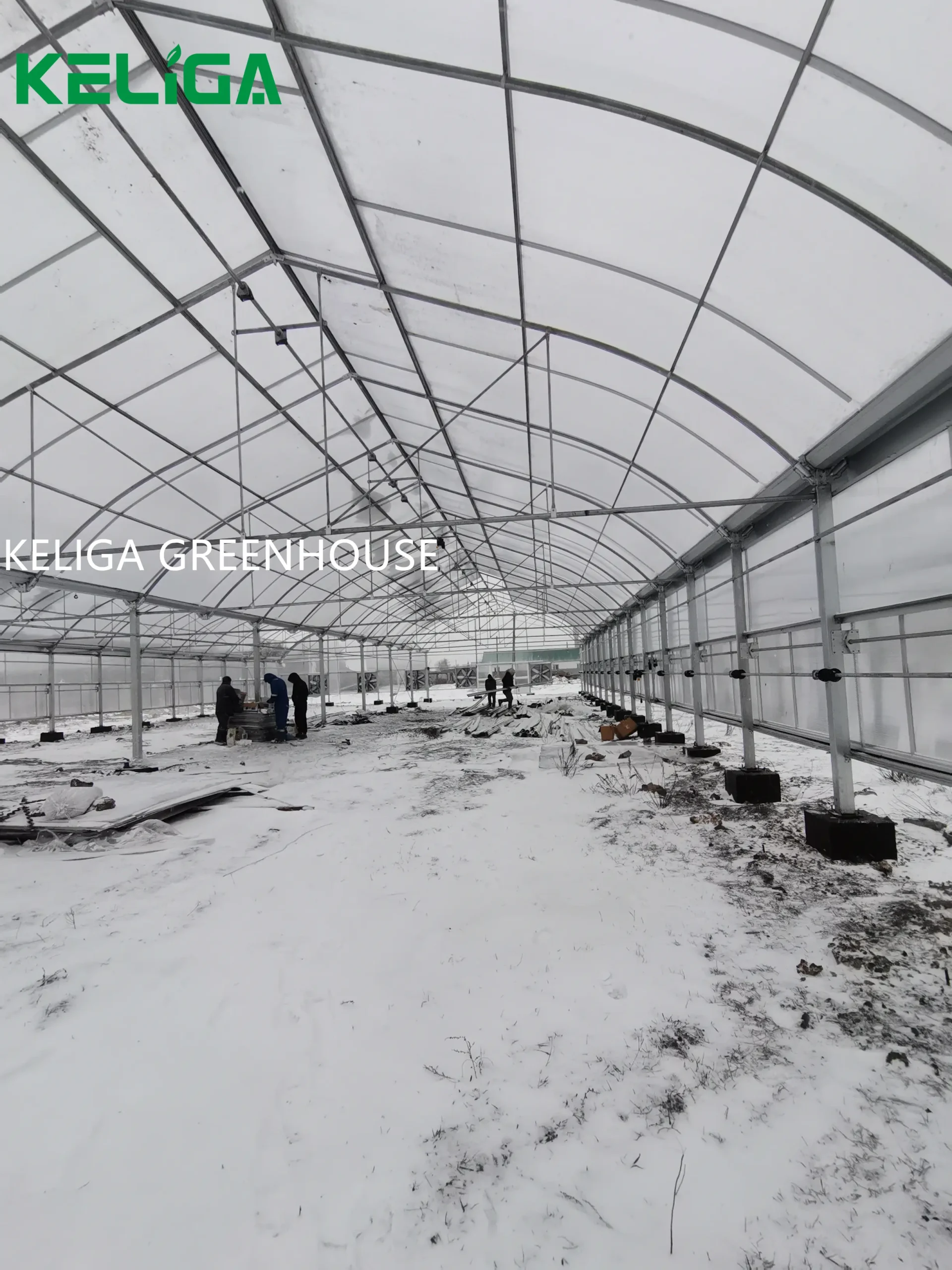
Almaty, Kazakhstan polycarbonate greenhouse
The cost and construction cost of substrate cultivation are the lowest in soilless cultivation, and its practicality is significantly better than other soilless cultivation models.
2,000 sqm Polycarbonate Greenhouse for Almaty, Kazakhstan – Full Product Description
A Turnkey Commercial Solution Designed for Continental Climate – Complete with Essential Integrated Systems
Market Overview: Greenhouse Growth in Almaty
Almaty, Kazakhstan‘s largest city, is at the forefront of the country‘s agricultural modernization. As of 2025, the Almaty region operates 48 greenhouse complexes covering 79.2 hectares, producing 13,800 tonnes of vegetables annually – including 8,200 tonnes of tomatoes and 4,400 tonnes of cucumbers. Industry experts predict a 15% production growth by 2026, driven by strong demand for locally grown, fresh produce year-round.
The Kazakh government has created an exceptionally favorable investment environment for greenhouse agriculture. Under Order No. 317 of the Ministry of Agriculture, new greenhouse owners qualify for a 25-30% reimbursement of investment costs. Additionally, the government offers 1% concessional loans for 10 years specifically for greenhouse construction projects. These policies, combined with a planned $150 million investment in greenhouse infrastructure nationwide, make 2026 the right time for growers to scale up.
Why a 2,000 sqm Polycarbonate Greenhouse for Almaty?
Almaty‘s climate is classified as humid continental (Köppen: Dfa), with extreme seasonal variation. Winter temperatures drop to -8.4°C, with extreme cold spells reaching -17°C or lower. Snowfall covers the ground for several months, posing heavy snow loads. Summer temperatures peak at 30°C, requiring effective cooling and ventilation. This 2,000 sqm polycarbonate greenhouse is purpose-engineered for these demanding conditions.
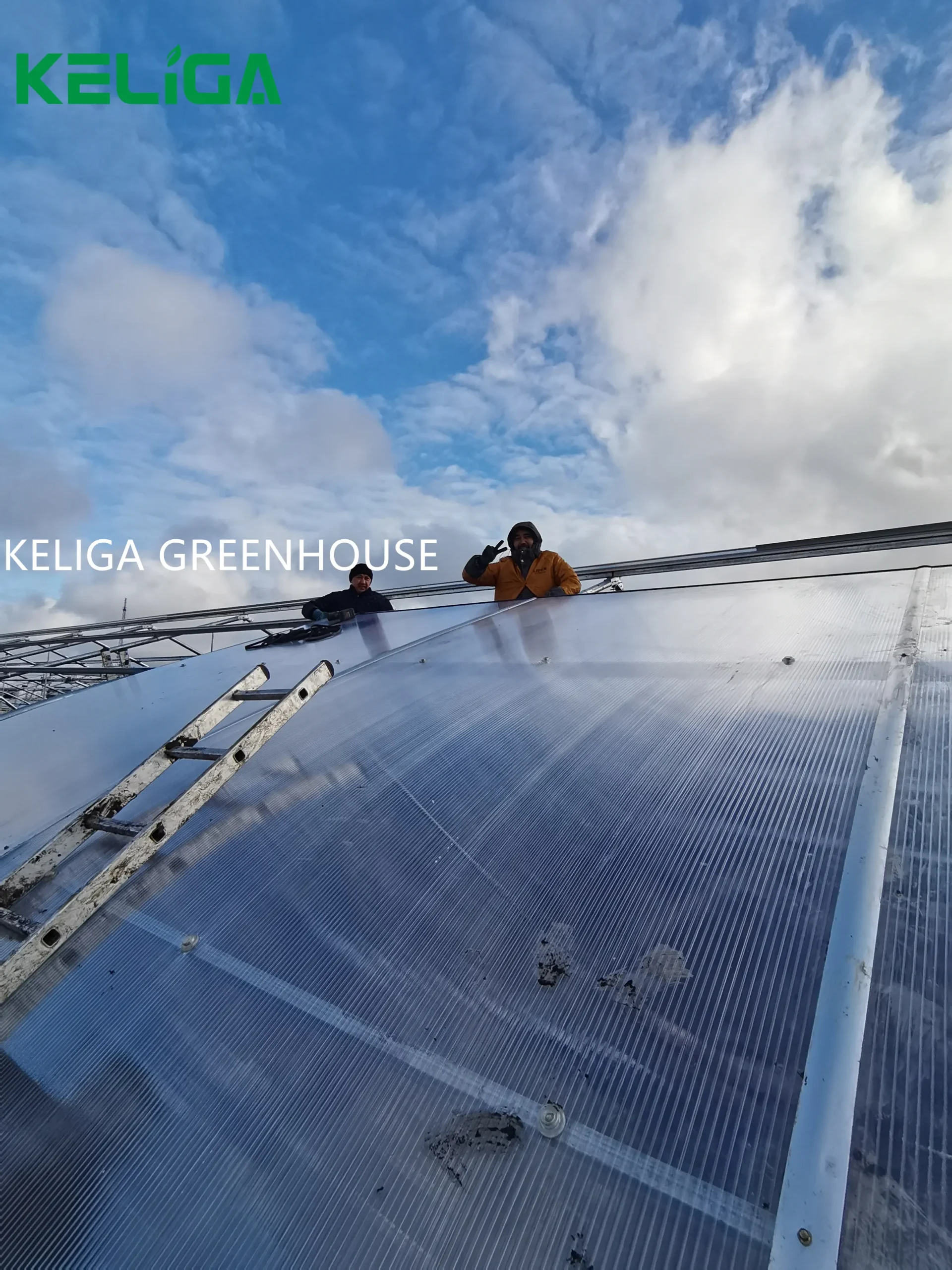
Polycarbonate panels bring critical advantages for Kazakhstan‘s climate. Multi-wall panels (8-10mm thickness) offer significantly better thermal insulation than single-layer polyethylene film, reducing heating energy consumption in winter by 30-40%. They are virtually unbreakable, hail-resistant, and provide 90%+ light diffusion for uniform crop growth.
The 2,000 sqm footprint is widely recognized as the ideal commercial scale for mid-sized enterprises and cooperatives expanding from pilot phases to full-scale production. It delivers meaningful output – comparable to 1.5-2 hectares of productive growing area – while remaining manageable for a single team of 8-12 trained operators. Moreover, identical 2,000 sqm units can be added modularly for scalable expansion without redesigning core systems.
Structural Design: Wind and Snow Load Ratings
The structural engineering of this greenhouse meets and exceeds both Chinese national standards (GB/T 51183-2016) and the requirements for heavy snowfall regions like northern Kazakhstan.
Wind Load Rating: 0.30-0.45 kN/m² (equivalent to Beaufort Scale 10, or 85-100 km/h wind speed)
The galvanized steel frame and multi-span truss system are engineered to maintain structural integrity under strong continental winds. The 8 mm polycarbonate covering is tested for 90 mph wind resistance. For regions of Kazakhstan experiencing higher wind events, upgraded ratings up to 0.6 kN/m² are available as an optional enhancement.
Snow Load Rating: 0.40-0.50 kN/m² (40-50 kg per sqm, equivalent to approximately 30-40 cm of fresh snow on the roof surface)
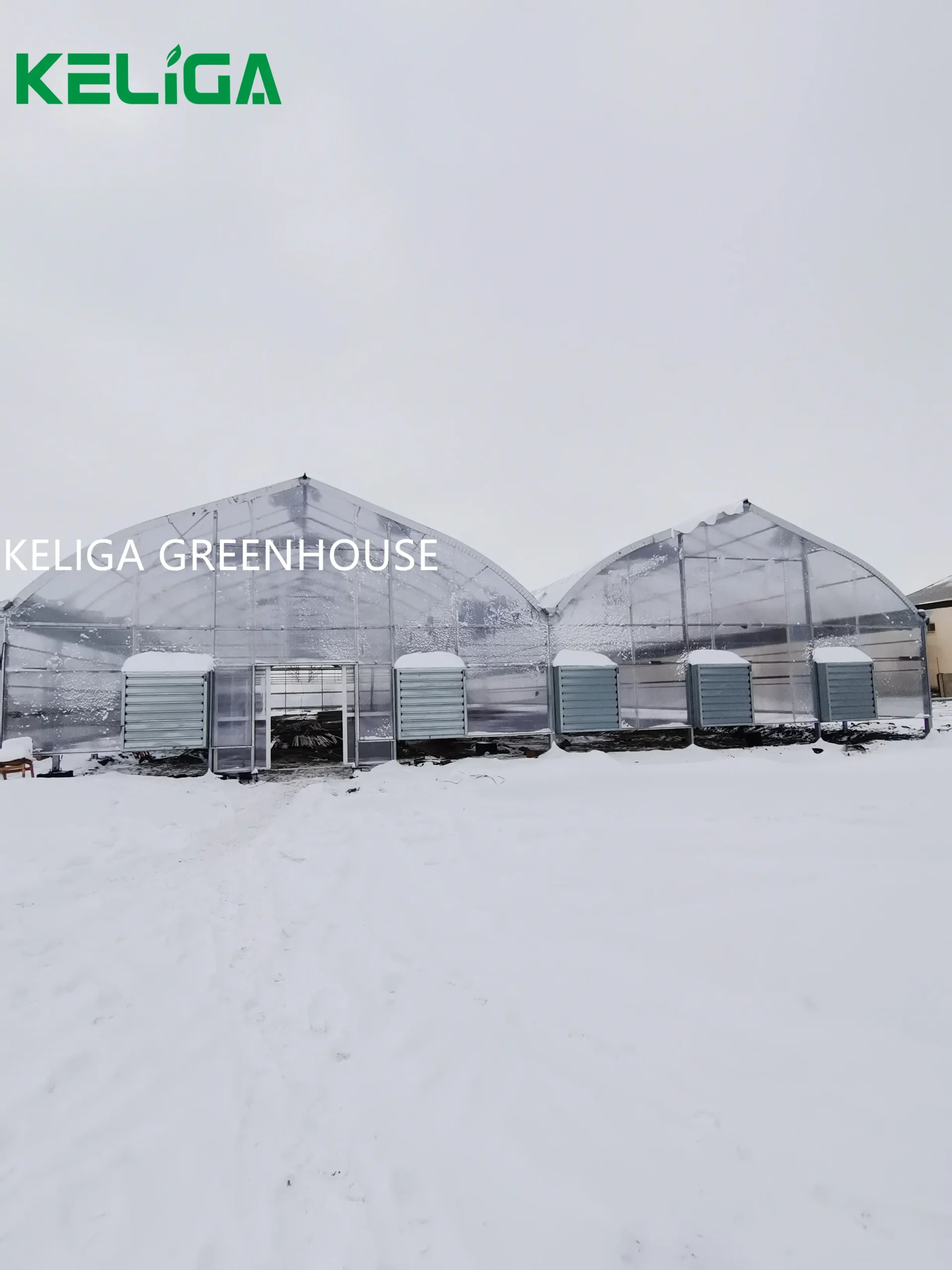
The multi-span peaked roof design prevents snow accumulation by promoting natural sliding and shedding. This design feature is mission-critical for Almaty winters, where snow can remain on roofs for extended periods. The greenhouse is certified for snow loads of 35-45 kg/m²; for the heaviest snowfall zones of northern Kazakhstan, custom reinforcement up to 75 kg/m² is available as an optional upgrade.
Frame Specifications:
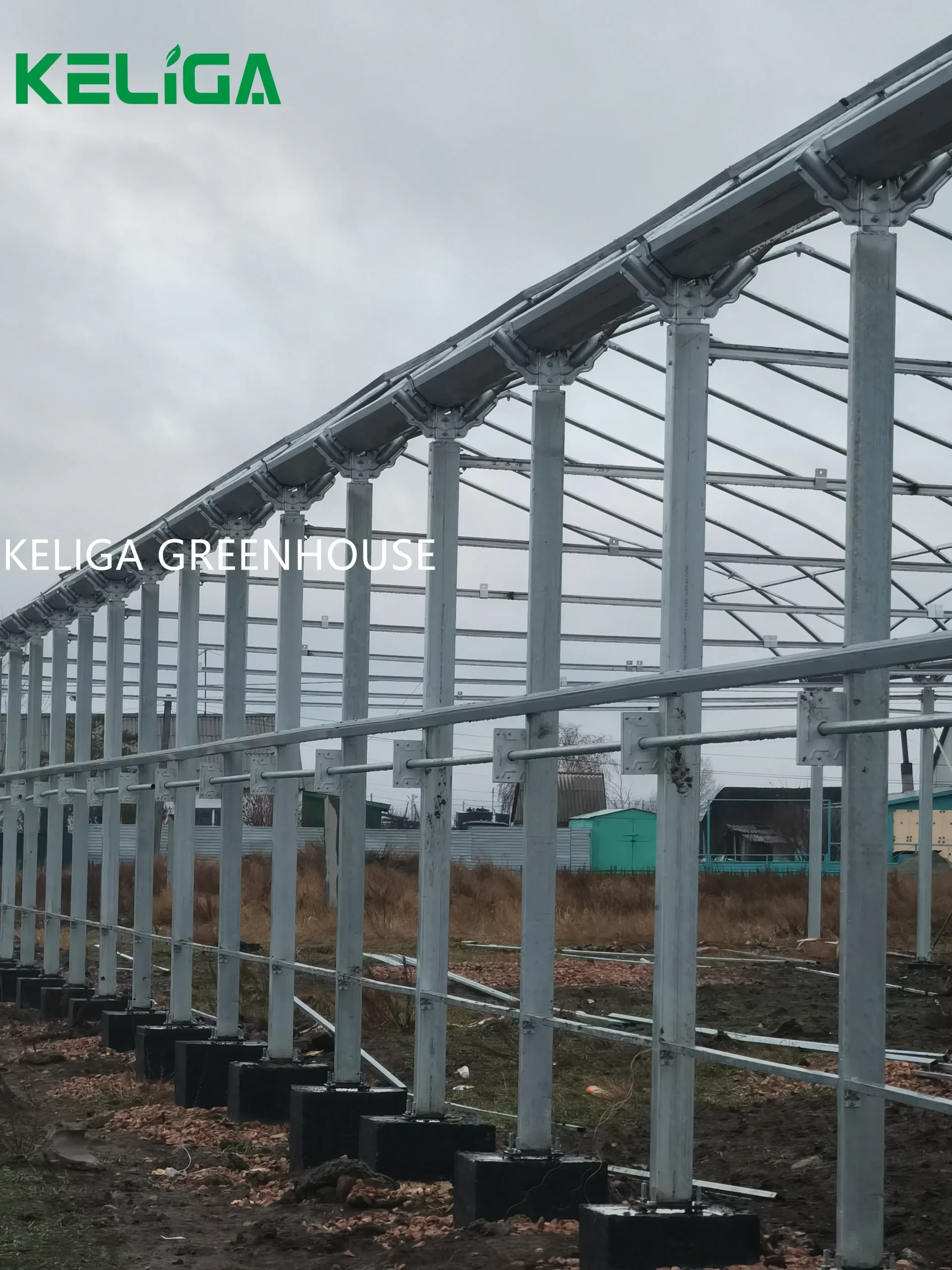
Material: Hot-dip galvanized steel (Grade Q235), double-sided galvanization to GB/T 3091-93 standards
Main columns: 120×120×3.0 mm rectangular tube or 150×150×3.5 mm for added reinforcement
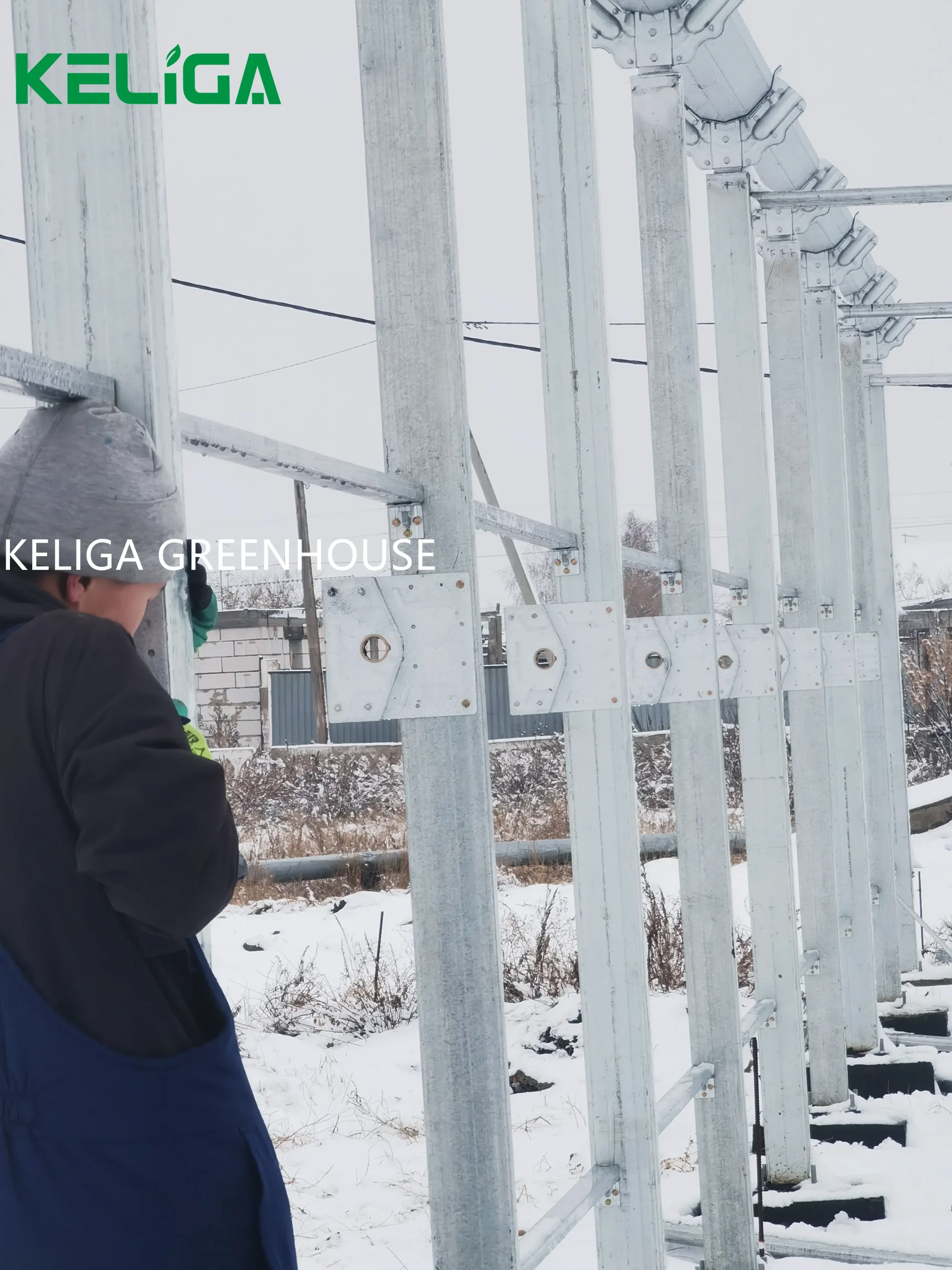
Trusses and purlins: 50×50×2.0 mm rectangular tube, pre-drilled for bolt assembly – field welding is NOT required
Gutter (water channel): 2.0 mm cold-bent galvanized steel, 2.5‰ slope for positive drainage
Service life: Main structure 15-20 years (minimum 10-year structural warranty); Polycarbonate panels 8-12 years (UV‑protected surface)
Fasteners: All bolts are Grade 12.9 with hot‑dip galvanizing, ensuring corrosion resistance
Ground Snow Load Reference: Almaty‘s average annual snowfall is approximately 74mm liquid equivalent, but snow can drift significantly on multi-span roof surfaces. Deep foundations and snow retention systems are engineered as needed based on site-specific surveys.
Hot-Dip Galvanized Steel Frame
The structural skeleton of this greenhouse is built entirely from hot-dip galvanized steel. Galvanization (zinc coating thickness 0.06––0.08 mm) provides long-lasting corrosion protection without requiring field welding or painting after assembly. All components are factory-fabricated, pre-drilled, and shipped ready for bolt-together assembly. Field welding is NOT required – this significantly simplifies on-site installation, reduces labor time, and ensures consistent corrosion resistance across every connection point. The multi-span design features gutters (water channels) that collect and drain rainwater, preventing roof ponding and subsequent overflow or leakage.
Integrated System Package for Year-Round Production
A complete 2,000 sqm polycarbonate greenhouse cannot function as a productive asset without integrated climate control systems. The following systems are included in the standard turnkey package:
1. Ventilation System
Roof ridge vents: Continuous motorized vents running the full length of each greenhouse bay, covering 25-30% of roof area, actuated by rack-and-pinion or push-rod drivers
Sidewall roll-up vents: Motorized film roll-up along both sidewalls, synchronized with roof vents for effective cross-ventilation during summer heat
Control: Automatic climate controller monitors temperature and humidity sensors, opening/closing vents based on user-programmed setpoints
Air exchange rate: 8-12 air changes per hour achievable through natural ventilation alone – sufficient to prevent overheating on most summer days
2. Heating System
Heat source: Gas‑fired hot water boiler, electric unit heaters, or diesel‑fired heating – sized for 100-150 W/m² heating capacity for Almaty winter conditions
Distribution network: Overhead finned hot water pipes or forced-air unit heaters placed evenly throughout the 2,000 sqm interior
Thermal retention: Polycarbonate panels provide excellent insulation, but for true year-round production, active heating is essential during the December-February cold period
Energy efficiency note: The twin-wall polycarbonate covering alone reduces heat loss by approximately 35% compared to single-layer film, meaning lower fuel bills during the long heating season
3. Cooling System (Evaporative Pad and Fan)
Wet curtain (evaporative cooling pad): Cellulose pad installed on one end wall, supplied by a recirculating water pump
Exhaust fans: High-capacity fans mounted on the opposite end wall (total extraction capacity: 200,000-300,000 m³/hour for 2,000 sqm)
Cooling effect: Reduces incoming air temperature by 5-8°C during Almaty‘s summer heat (June-August), protecting crop health during peak heat
Control: Thermostat-triggered activation only when ventilation alone is insufficient for cooling
4. Shading System
Internal shade curtain: White or aluminized knitted fabric, shading rate 50-75%, suspended below the roof structure
External shade curtain (optional upgrade): Reflective fabric mounted above the polycarbonate roof, providing additional heat rejection
Actuation: Motorized roll-up with automatic control based on light intensity sensors (PAR or lux)
Purpose: Reduces peak midday light intensity and lowers cooling load without stopping photosynthesis
5. Irrigation and Fertigation System
Drip irrigation: Mainline supply pipe with drip tape or emitter lines in each planting row
Fertigation injector: Venturi-type or diaphragm pump that adds water-soluble fertilizer to irrigation water proportionally
Control panel: Programmable timer, capable of 6-8 irrigation cycles per day with manual or automatic scheduling
Water efficiency: 85-95% water use efficiency compared to overhead sprinklers – critical for regions where water management matters
6. Circulation Fans (Horizontal Airflow)
Installation: Small, energy-efficient fans suspended from the roof structure, spaced approximately 10-12 meters apart throughout the 2,000 sqm area
Function: Continuously mix interior air to eliminate temperature stratification (warm roof air descending to plant level) and prevent humidity pockets – essential for disease prevention during winter when vents are closed
Benefit: Consistent temperature from floor to ceiling results in uniform crop growth and ripening
7. Control Panel and Basic Automation
Central controller: Manages temperature monitoring, vent actuation, shade curtain deployment, circulation fan operation, and heating/cooling activation based on user-defined parameters
Sensors: Multiple sensors distributed across the 2,000 sqm footprint for accurate microclimate detection
Optional IoT upgrade: Remote climate monitoring and control via smartphone – allowing real-time adjustments without being physically present
What‘s Included in Your Turnkey Package
| Component | Specifications |
|---|---|
| Footprint | 2,000 sqm ±5% (configurable dimensions: e.g. 40m × 50m, 25m × 80m) |
| Span configuration | Multi-span, 8.0-9.6m or 10.8-12.0m span width |
| Eave height | 4.0-4.5m |
| Ridge height | 5.5-6.5m (including ventilation riser) |
| Wind load design | 0.30-0.45 kN/m² (85-100 km/h); custom up to 0.60 kN/m² |
| Snow load design | 0.40-0.50 kN/m² (40-50kg/m²); custom up to 75 kg/m² for heavy snow zones |
| Covering | 8mm or 10mm twin-wall UV-stabilized polycarbonate (10-year UV warranty, 90%+ light transmission) |
| Frame | Hot-dip galvanized steel, Q235 grade, bolt assembly (NO welding required) |
| Ventilation | Continuous motorized roof vents + motorized sidewall roll-ups |
| Heating | Gas/electric/diesel heating unit + pipe/fan distribution (specified at order) |
| Cooling | Evaporative wet pad + exhaust fan system (2,000 sqm capacity) |
| Shading | Internal motorized shade curtain, 50-75% shading |
| Irrigation | Drip irrigation kit + fertigation injector + timer control |
| Circulation | Horizontal airflow fans (6-8 units for 2,000 sqm) |
| Control | Basic climate controller (temperature/humidity sensors, vent actuation, shade/shutter motor controls) |
| Assembly | Full installation manual + fastener and sealant kit |
| Certification | ISO 9001:2015, CE (electrical compliance) |
| Warranty | Frame: 10-15 years; Polycarbonate panels: 8-10 years; Electrical components: 1-2 years |
Customization available: deeper foundations, higher wind/snow load ratings, IoT control upgrade, CO₂ enrichment system, blackout curtain for photoperiod control, soilless (hydroponic) cultivation system.
Crop Suitability for Year-Round Production in Almaty
With the full system package installed and operational, the 2,000 sqm polycarbonate greenhouse can support four-season production of high-value crops:
| Crop Category | Winter (Heated) | Summer (Ventilated + Shaded) |
|---|---|---|
| Solanaceous (tomatoes, peppers, eggplants) | High-wire indeterminate tomatoes; sweet bell peppers | Summer indeterminate varieties |
| Cucurbits (cucumbers, melons) | Parthenocarpic (seedless) English cucumbers | Standard slicing types |
| Leafy greens (lettuce, arugula, spinach, kale, Swiss chard) | Year-round in NFT or floating raft systems | Year-round |
| Strawberries | Day-neutral varieties for Jan-Apr harvest | Everbearing varieties |
| Herbs (basil, cilantro, dill, mint, parsley) | Greenhouse-tolerant commercial cultivars (Purple Ruffles basil, Santo cilantro) | Greenhouse-tolerant cultivars |
| Seedlings and transplants | Tomato, pepper, cabbage, and flower plugs for spring field planting | Autumn brassica and ornamental plugs |
All crops benefit significantly from controlled-environment agriculture – accelerated growth cycles, higher marketable yields, extended harvest windows, and reduced pest pressure.
Policy Support and Financing for Greenhouse Construction in Kazakhstan
Kazakhstan‘s government has implemented comprehensive support mechanisms for the greenhouse industry:
| Program | Key Details |
|---|---|
| Investment cost reimbursement | 25% of greenhouse construction cost is reimbursable under Order No. 317 (2018). Cost reimbursement increased to 30% under the Investment Subsidy Rules for certain categories. |
| Concessional lending | Loans at 1% for 10 years, with up to 24 months grace period on principal repayment, available for greenhouse construction and vegetable storage facilities. |
| State investment pipeline | 677 agricultural projects totaling 3.3 trillion tenge planned for 2025-2027, including 1.1 trillion tenge in 2026 specifically for agro-industrial modernization. |
| Infrastructure support | Industrial zones designated for greenhouse construction in Almaty, Astana, Shymkent, and other cities. Costs for water, electricity, gas connections and related communications are borne by local government. |
| Operating cost subsidies | 50% of input costs for fertilizers, plant protection products, irrigation water supply, and vegetable seeds are subsidized. |
| Large-scale project funding | $150 million greenhouse investment announced for Shymkent region; Development Bank of Kazakhstan financing modern greenhouse complex in Almaty region (400 tons cucumbers + 2,000 tons tomatoes annually, commissioning Q2 2026). |
For prospective buyers: The combination of concessional lending at 1% for 10 years plus 25-30% investment reimbursement means the effective capital cost of a greenhouse can be substantially reduced. These policies align directly with Kazakhstan‘s goal of import substitution for fresh vegetables – making 2026 an ideal year to invest.
Summary – Why This 2,000 sqm Turnkey Package Is Right for Your Almaty Greenhouse Business
Climate-engineered: Designed specifically for humid continental climates with extreme winter cold and heavy snow loads – purpose-built for Almaty, not generic
Structurally robust: Wind load 85-100 km/h (0.30-0.45 kN/m²), snow load 40-50 kg/m² – with up to 0.6 kN/m² and 75 kg/m² custom options – exceeding local code requirements for safety
Complete system package: Ventilation + heating + cooling + shading + irrigation + circulation + control panel – everything included in one turnkey delivery and installation
Energy-efficient polycarbonate: Twin-wall panels retain heat in winter, diffuse light in summer – reducing heating and cooling demand compared to single-layer film covers
Scalable and modular: 2,000 sqm is the ideal commercial scale – large enough for profitable year-round production, small enough for a single management team. Expandable by adding identical multi-span units
Strong policy support: Non-repayable construction subsidies (25-30%) + 1% concessional 10-year loans for greenhouse projects + subsidized operating inputs (50% on fertilizers, seeds, plant protection)
Contact Us Today for Your Customized Quotation
Our turnkey greenhouse team offers: complete structural engineering based on your site‘s specific climate data, full assembly guidance, local operator training, and ongoing spare parts support. We have extensive greenhouse deployment experience across Kazakhstan and Central Asia. For a free cost estimate, custom design consultation, or site assessment in Almaty, please contact our sales office – reference project code KZ‑AG‑2000‑PC for priority response.
Your 2,000 sqm polycarbonate greenhouse is not just a structure – it‘s a productive asset designed for the Almaty climate, delivering year-round harvests, capital appreciation, and food security for your community. Start your investment with confidence.
R&D Focus Areas
We focus on several core R&D areas, dedicated to solving key direction challenges in the energy storage sector.


Our Process
Steps to Your Greenhouse
1. Consult
We begin with a personalized consultation to capture your vision and needs.
2. Design
Our experts craft a detailed plan with eco-friendly practices for your approval.
3. Execute
Our skilled team transforms your space with precision and care.
The Goal
Our Mission
To transform outdoor spaces into beautiful, functional, and sustainable environments that enhance our clients’ lifestyles while respecting the natural world. We are committed to delivering exceptional service and innovative solutions through our passion for gardening and landscaping.
The Outlook
Our Vission
To be the leading provider of eco-friendly gardening and landscaping services, inspiring communities to embrace sustainable practices and appreciate the beauty of nature in their everyday lives. We envision a future where every outdoor space reflects harmony between human creativity and the natural environment.