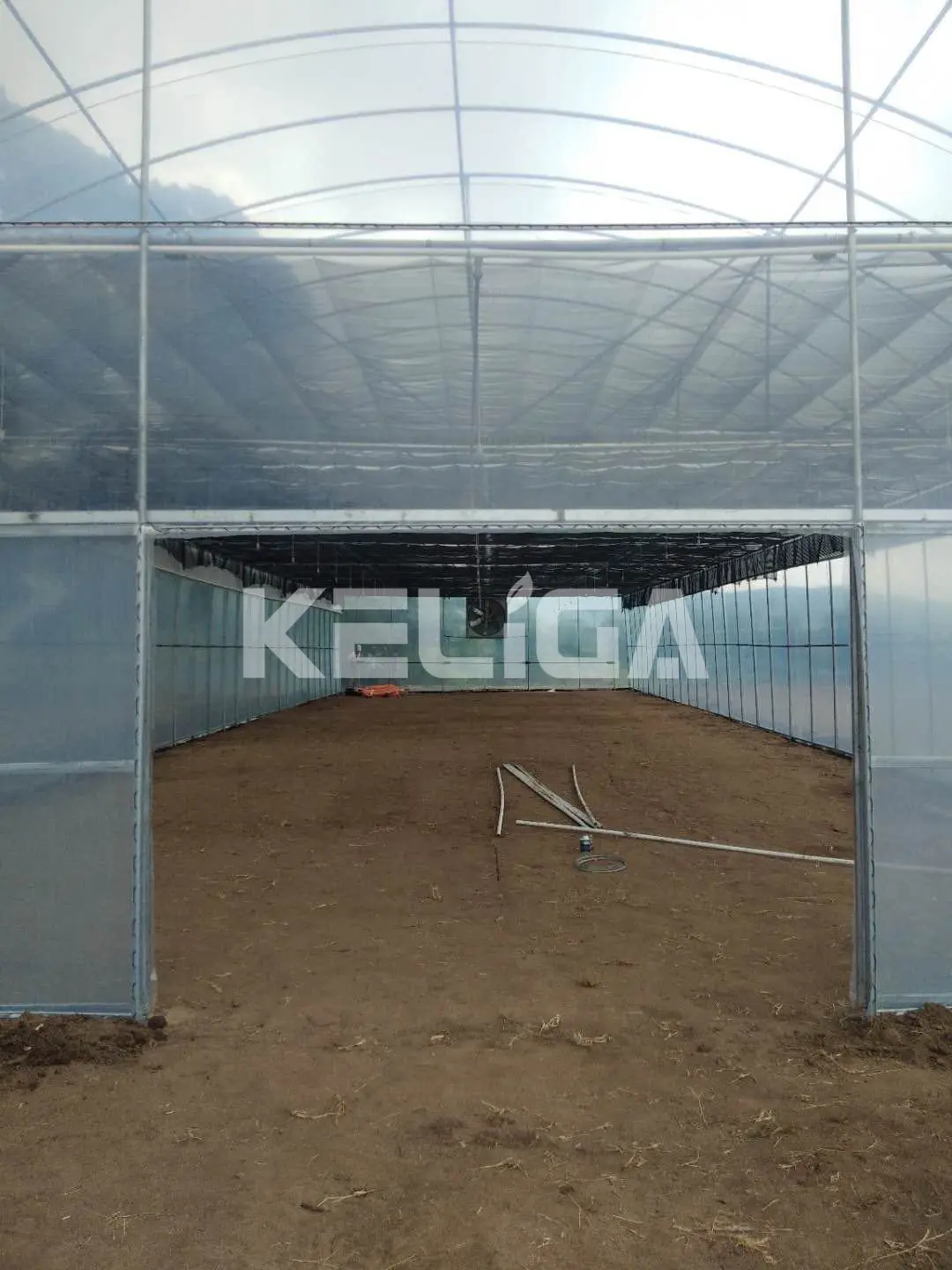
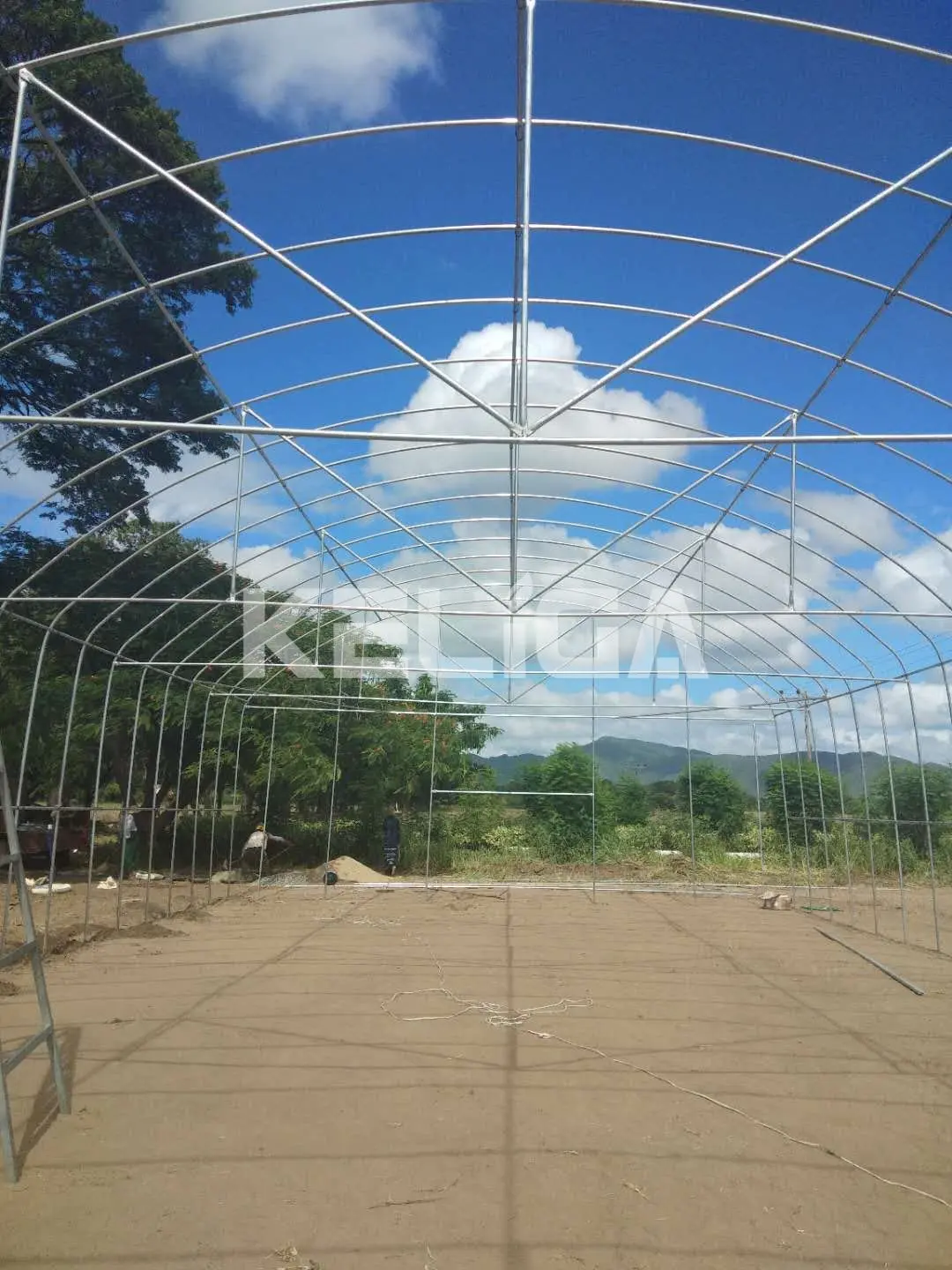
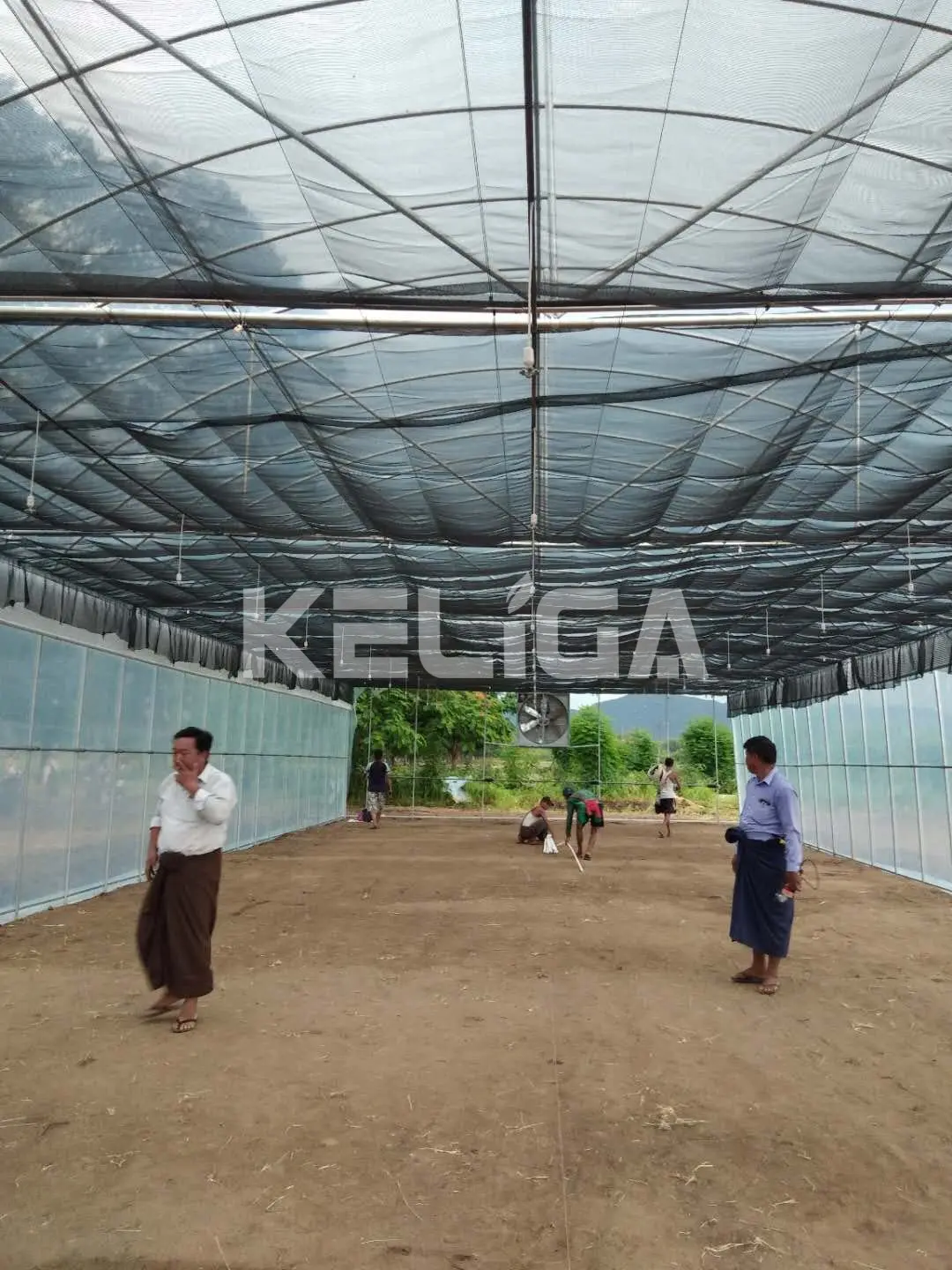
100 sets of 10×30 meter plastic film greenhouses in Myanmar
The cost and construction cost of substrate cultivation are the lowest in soilless cultivation, and its practicality is significantly better than other soilless cultivation models.
100 Sets of 10×30 m Plastic Film Greenhouses – Myanmar(United Nations tender winning projects)
1. Project Overview
Location: Myanmar (diverse climate: tropical monsoon in lowlands, moderate in highlands)
Quantity: 100 independent greenhouse units
Dimensions per unit: 10 m (width) × 30 m (length) – ground area 300 m² per unit, total 30,000 m²
Structure type: Single‑span or multi‑span arch greenhouse, PE (polyethylene) film covering
Key systems included: Manual shading system, drip irrigation system, natural ventilation system
These greenhouses are designed to withstand Myanmar‘s typical weather conditions – high solar radiation, heavy monsoon rains, strong wind gusts (up to 80 km/h), and high humidity. They are intended for year‑round production of high‑value vegetables (tomatoes, cucumbers, peppers, leafy greens), herbs, strawberries, cut flowers, or nursery seedlings.
All systems are designed for manual operation – no electricity required for shading and ventilation, making them ideal for rural areas with unreliable grid supply. The irrigation system can be operated manually or connected to a small pump.
2. Structural Specifications (Per 10×30 m Greenhouse)
| Parameter | Specification |
|---|---|
| Frame material | Hot‑dip galvanized steel pipe (Q235B), zinc coating ≥ 275 g/m², rust resistant for 10+ years |
| Arch pipe | Outer diameter 32 mm × 1.5 mm wall thickness, spaced 1.0 m or 1.2 m |
| Purlin / longitudinal connection | 25 mm × 1.2 mm galvanized round pipe, 4–5 rows |
| Gutter (if multi‑span) | Not applicable (single‑span design), but optional connection kit to join units side‑by‑side |
| Side wall columns | 50 mm × 30 mm rectangular pipe, 2.0 mm thick |
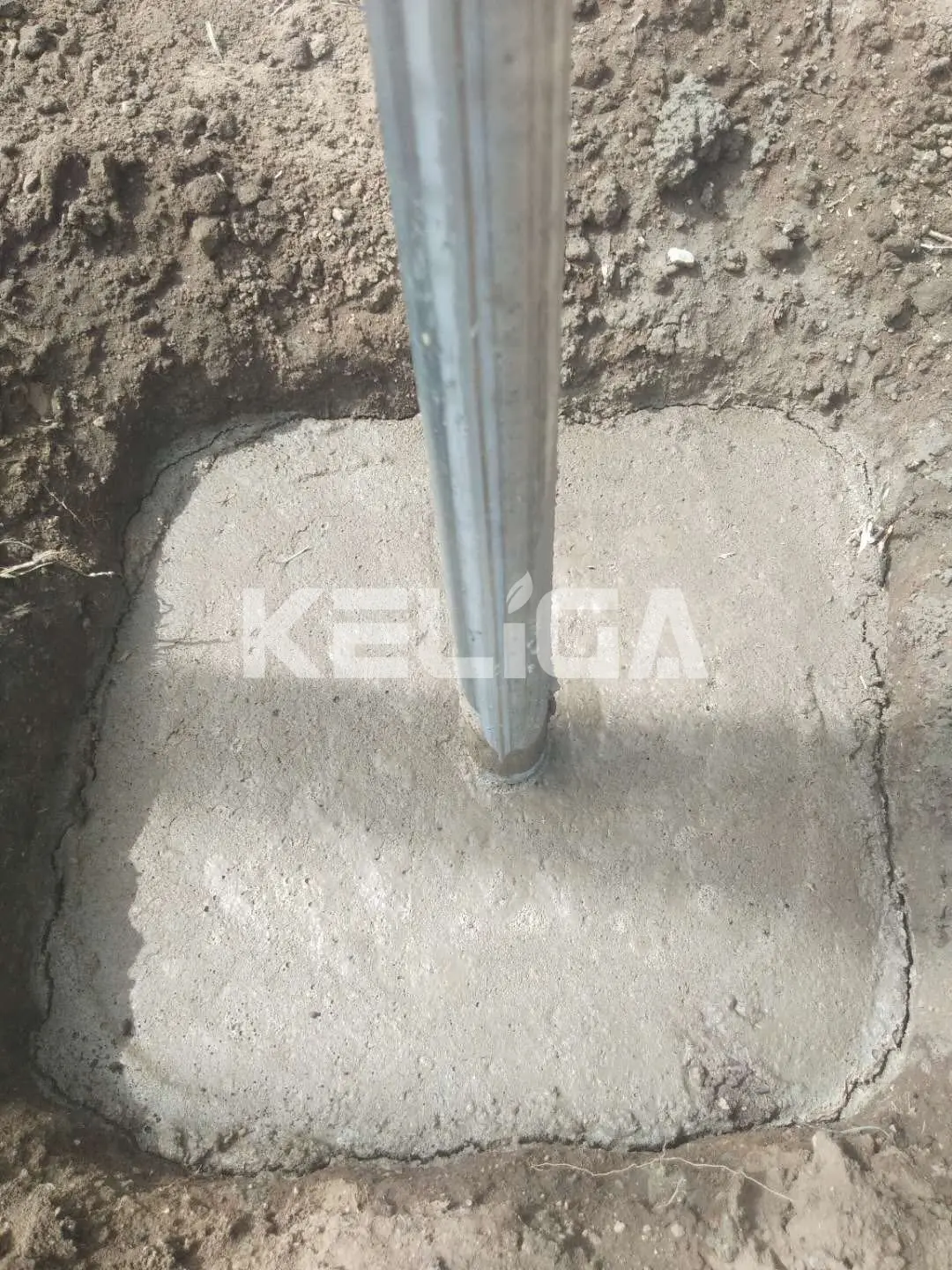
| Foundation | Buried post (0.5 m deep) with concrete anchor or ground screw (customer chooses) |
| Covering – roof & sides | 200 μm (200 micron) 3‑layer co‑extruded polyethylene film, UV stabilized, anti‑dust, anti‑drip (condensation control). Light transmission 88–90%. Lifespan 3‑4 years in tropical climate. |
| End gable | Same PE film over a dedicated steel frame, with a walk‑through door (1.8 m × 1.2 m) and a roll‑up vent. |
| Wind & snow load | Designed for wind speed 100 km/h (27.8 m/s), snow load 0.15 kN/m² (not critical in Myanmar, but included for safety) |
3. Manual Shading System – Description
3.1 What It Does
The manual shading system reduces solar heat gain inside the greenhouse during intense midday sun (common in Myanmar‘s hot season, 35–45 °C). By blocking 50–70% of incoming light, it lowers inside temperature by 5–8 °C, prevents leaf burn, and maintains optimal growing conditions for sensitive crops (leafy greens, peppers, young seedlings).
3.2 Components (Per Greenhouse)
| Component | Specification |
|---|---|
| Shade fabric | Knitted high‑density polyethylene (HDPE), 50% or 70% shading rate (customer choice). UV stabilized, tear‑resistant, lightweight. Colour: white (reflects heat) or green/black (absorbs less heat). |
| Cable / rope system | Two stainless steel or galvanized steel cables (3 mm) running along the length of the greenhouse at ridge height. |
| Pull mechanism | Manual crank handle or simple rope‑and‑pulley system located at one gable end (accessible from ground level). |
| Rollers / rings | Stainless steel rings sliding on the cables; shade fabric attached to rings. |
| End stops | Fixed at both ends to prevent over‑travel. |
3.3 Operation
-
To deploy (close) shade: Grower turns the manual crank handle clockwise. The shade fabric unrolls from the storage position at one gable end and extends along the whole 30 m length, covering the roof (and optionally sidewalls if full‑coverage model selected).
-
To retract (open) shade: Turn crank counter‑clockwise. Fabric rolls back to the storage end, exposing full sunlight.
-
Time to fully open/close: Approximately 2–3 minutes per greenhouse (one person operation).
3.4 Integration with Ventilation
The shade can be partially deployed (e.g., 50% open) by stopping the crank at mid‑position. This allows growers to fine‑tune light intensity while still using natural roof vents for airflow.
4. Ventilation System – Description
4.1 Natural Ventilation Design
Because no electricity is available for fans (except optional small solar fans), the greenhouse relies on passive natural ventilation using the stack effect and wind pressure.
4.2 Components (Per Greenhouse)
| Component | Specification |
|---|---|
| Roof ridge vent | Continuous opening along the entire 30 m ridge, width 0.8–1.0 m. Covered with insect net (40 mesh) and PE film flap. |
| Side roll‑up curtains | Both sidewalls (10 m length each) can be rolled up from the bottom to a height of 1.5 m. Manual crank on each side. |
| End gable louver | A small ventilation flap (0.8 m × 0.8 m) on each gable end (opposite to door). Manual push‑open stay. |
| Insect netting | 40‑mesh polyethylene net installed over all vents to prevent whiteflies, aphids, and thrips from entering. |
4.3 Operation
-
Roof vent: Manually opened by pulling a rope/cable that lifts the film flap. Propped open with adjustable metal arms. Always left partially open (10–20 cm) to allow hot air to escape at the ridge.
-
Side roll‑ups: On hot sunny days (30 °C+), both side curtains are rolled up fully (1.5 m height) to allow cross‑ventilation. During heavy rain or high wind (>40 km/h), side curtains are rolled down and secured.
-
End louvers: Opened when additional airflow is needed, especially during monsoon humidity.
4.4 Air Exchange Rate
With roof vent + both side curtains fully open, the greenhouse achieves 30–40 air changes per hour under moderate wind (2 m/s). This keeps internal temperature within 2–3 °C of outside temperature (without shading). With shading deployed, the interior can stay 4‑6 °C cooler than outside.
5. Irrigation System – Description
5.1 System Type
Drip irrigation (also called trickle irrigation) – the most water‑efficient method for greenhouse crops. Delivers water and liquid fertiliser directly to the root zone, minimising evaporation and weed growth.
5.2 Components (Per Greenhouse – Manual / Low‑Pressure Version)
| Component | Specification / Quantity |
|---|---|
| Main header pipe | 32 mm (1.25 inch) LDPE or PVC pipe, running along one side of the greenhouse (30 m length). |
| Sub‑main / lateral connectors | 16 mm LDPE drip tube connectors (every 0.5 m or according to crop row spacing). |
| Drip lines (laterals) | 16 mm drip tape or dripline, with in‑line emitters spaced 0.3 m, 0.4 m, or 0.5 m (customer choice). Flow rate 1.0 L/h or 1.6 L/h per emitter. |
| Number of drip lines per greenhouse | 10 rows (1.0 m row spacing) × 30 m = 300 linear metres of drip line. |
| Filter | Disc filter or screen filter (120 mesh) installed at water source to prevent emitter clogging. |
| Pressure regulator | 1.0 bar regulator (if water pressure varies). |
| Manual control valve | Ball valve at greenhouse inlet to turn irrigation on/off. |
| Fertiliser injector | Optional low‑cost venturi injector for manual addition of water‑soluble fertilisers. |
| Water source connection | Fits standard 50 mm (2 inch) hose or PVC pipe from well, pond, or municipal supply. |
5.3 Operation
-
Water source: Gravity tank (elevated 2–3 m), small petrol/diesel pump, or mains water (if available).
-
Process: Grower opens the manual valve. Water flows through the filter, pressure regulator, then into the main pipe and drip lines. Water drips slowly at each emitter, soaking the root zone.
-
Irrigation duration: Typically 30–90 minutes depending on crop, soil type, and climate. For sandy soils in Myanmar‘s dry zone, 60 minutes may provide 15–20 L per plant.
-
Frequency: Once daily during hot dry season; every 2–3 days during monsoon or cooler months.
5.4 Advantages for Myanmar
-
Water saving: Uses 50–70% less water than overhead sprinklers – critical in central Myanmar‘s dry zone (e.g., Mandalay, Magway).
-
Fertiliser efficiency: Liquid fertiliser can be injected directly, reducing waste and runoff.
-
Low pressure operation: Works with as little as 0.5 bar (5 m head), allowing use of a simple elevated tank.
-
Weed and disease reduction: Water does not wet the foliage, so fungal diseases (powdery mildew, downy mildew) are suppressed.
5.5 Optional – Manual Overhead Sprinklers
For nurseries or leafy greens that benefit from overhead moisture, a separate manual sprinkler system (mini‑sprinklers on risers) can be added. However, drip is the standard for most cash crops.
6. Assembly & Installation – Customer Responsibility
These 100 greenhouses are delivered as DIY kits. Local installation teams (or the customer‘s own crew) can assemble them using basic tools. Each kit includes:
-
All steel pipes, pre‑cut and pre‑drilled with identification labels.
-
Clamps, bolts, nuts, and self‑tapping screws.
-
PE film rolls (roof and sidewalls separate, with clear markings).
-
Shade fabric, cables, crank handle, and hardware.
-
Ventilation ropes, pulleys, and cranks.
-
Drip irrigation kit (pipes, emitters, connectors, filter, valve).
-
Assembly manual with detailed diagrams (English and Burmese).
-
QR‑linked video tutorials.
Estimated assembly time per greenhouse (4 workers):
-
Foundation & frame erection: 2 days
-
Film installation: 1 day
-
Shading & ventilation systems: 0.5 day
-
Irrigation system: 0.5 day
Total per greenhouse: 4 days. For 100 units, a team of 8–10 workers can install 2–3 greenhouses per week. Total project duration (excluding logistics): ~8‑10 months.
7. Suitability for Myanmar’s Climate & Crops
| Region in Myanmar | Climate Challenge | How the Greenhouse Systems Address It |
|---|---|---|
| Central dry zone (Mandalay, Sagaing, Magway) | Extreme heat (45 °C+), low rainfall, high evaporation | Manual shading reduces peak temperature; drip irrigation saves water; side roll‑ups allow airflow. |
| Delta & lower Myanmar (Yangon, Ayeyarwady) | High humidity, heavy monsoon rains, strong winds | PE film protects from rain; side curtains close during storms; roof vent remains open for ventilation. |
| Shan Highlands (Taunggyi, Kalaw) | Cool nights (5 °C) in winter, intense daytime sun | Shading controls daytime heat; film retains some warmth at night; drip irrigation prevents freezing damage (if lines drained). |
| Coastal Rakhine / Tanintharyi | High wind, salt spray, very high humidity | Galvanised frame resists salt corrosion; roll‑up sides allow maximum ventilation; insect netting keeps out airborne pests. |
Recommended crops per season:
| Season | Crops |
|---|---|
| Hot dry season (Feb–May) | Heat‑tolerant varieties: okra, eggplant, bitter gourd, chili, watermelon (with drip irrigation) |
| Rainy monsoon (Jun–Sep) | Leafy greens (mustard, spinach, kale), herbs (basil, mint), short‑cycle tomatoes (with shade) |
| Cool dry season (Oct–Jan) | High‑value off‑season: tomatoes, cucumbers, bell peppers, strawberries, cut flowers (chrysanthemums, roses) |
8. Maintenance Guidelines (Simplified for Myanmar Farmers)
| System | Maintenance Task | Frequency |
|---|---|---|
| Steel frame | Check for loose bolts; tighten and re‑apply rust‑preventive paint if scratches occur. | Every 6 months |
| PE film | Inspect for tears (repair with dedicated film tape); clean dust/debris using soft brush and soapy water. | Every 3 months |
| Shade fabric | Check pulleys and cables for wear; lubricate crank mechanism with vegetable oil. | Before each season |
| Ventilation cranks & ropes | Replace frayed ropes; ensure roof vent hinges move freely. | Monthly |
| Drip irrigation system | Flush lines; clean filter; check emitters for clogging (open and flush). | Every 2 weeks |
| Insect netting | Wash with mild detergent if clogged; repair holes. | Every 3 months |
9. Packing & Logistics for 100 Sets
-
Container type: 40‑foot HQ containers.
- Total for 100 sets: 6 containers.
-
Delivery terms: FOB (China port) or CIF Yangon port.
-
On‑site support: Optional remote video guidance; a technician can be sent to train local installers (fees apply).
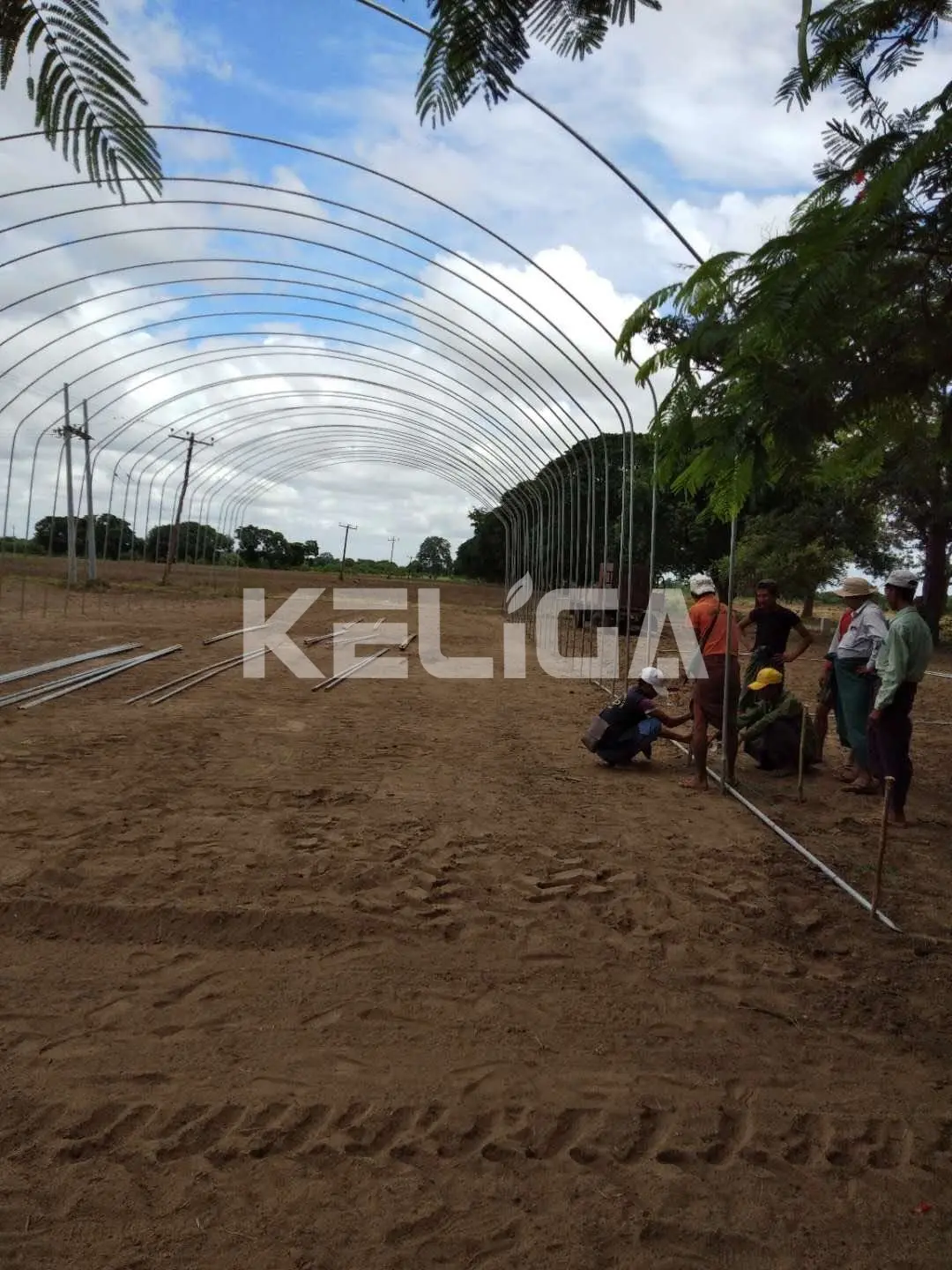
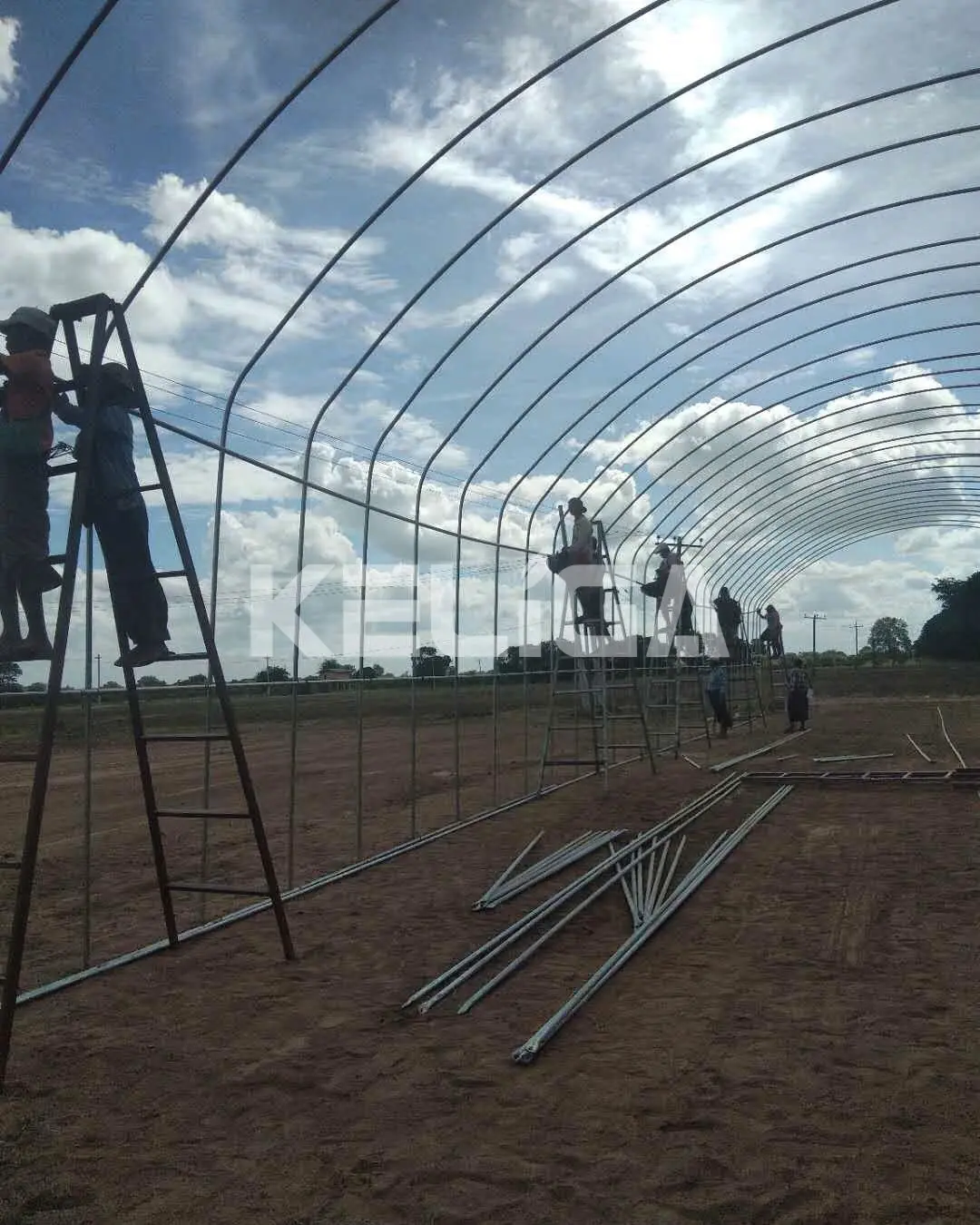
10x30m greenhoouse project in real picture
United Nations tender winning projects
Our Process
Steps to Your Greenhouse
1. Consult
We begin with a personalized consultation to capture your vision and needs.
2. Design
Our experts craft a detailed plan with eco-friendly practices for your approval.
3. Execute
Our skilled team transforms your space with precision and care.

The Goal
Our Mission
To transform outdoor spaces into beautiful, functional, and sustainable environments that enhance our clients’ lifestyles while respecting the natural world. We are committed to delivering exceptional service and innovative solutions through our passion for gardening and landscaping.
The Outlook
Our Vission
To be the leading provider of eco-friendly gardening and landscaping services, inspiring communities to embrace sustainable practices and appreciate the beauty of nature in their everyday lives. We envision a future where every outdoor space reflects harmony between human creativity and the natural environment.