The cost and construction cost of substrate cultivation are the lowest in soilless cultivation, and its practicality is significantly better than other soilless cultivation models.
Gutter connect plastic light deprivation greenhouse
Executive Summary
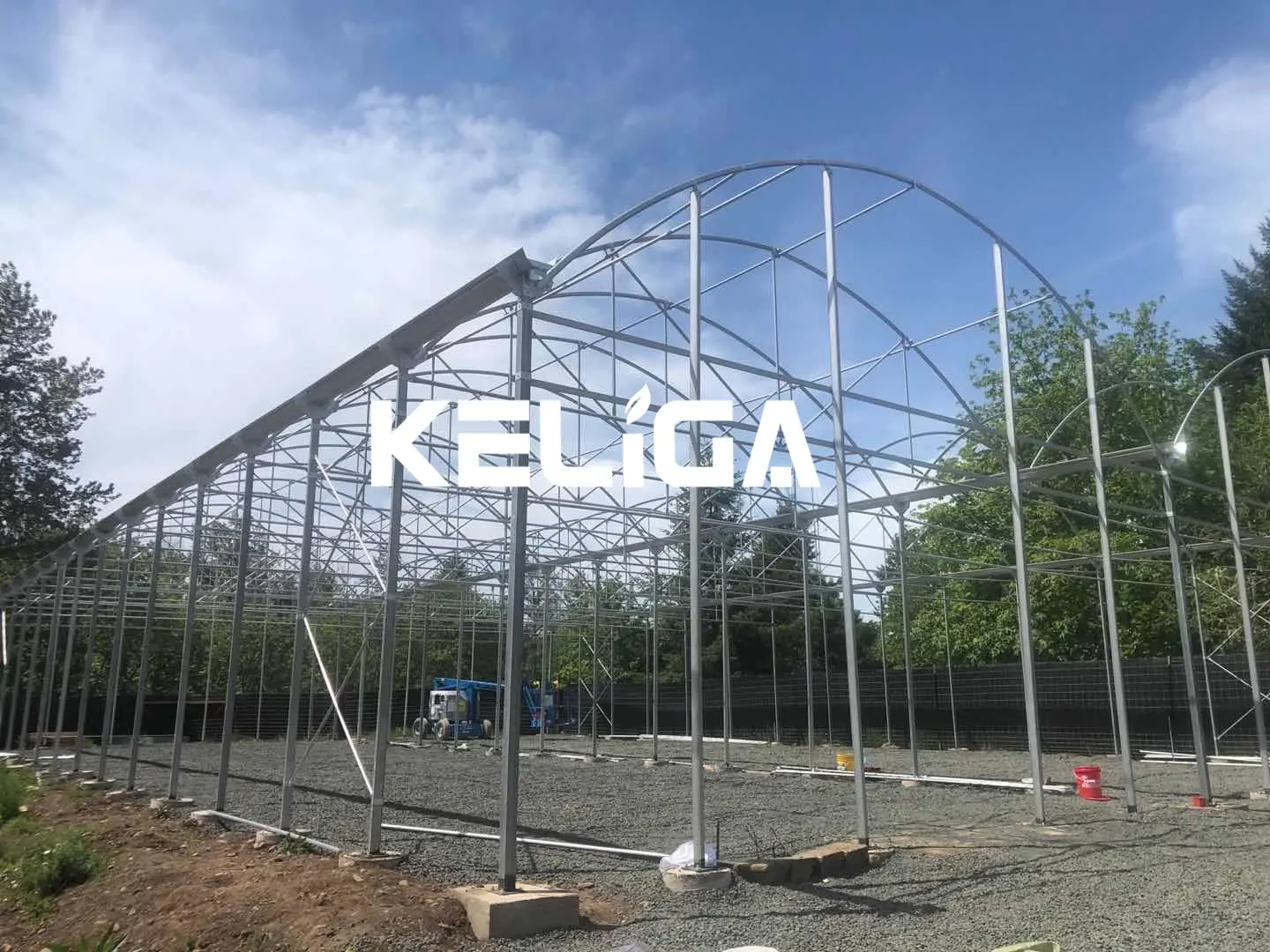
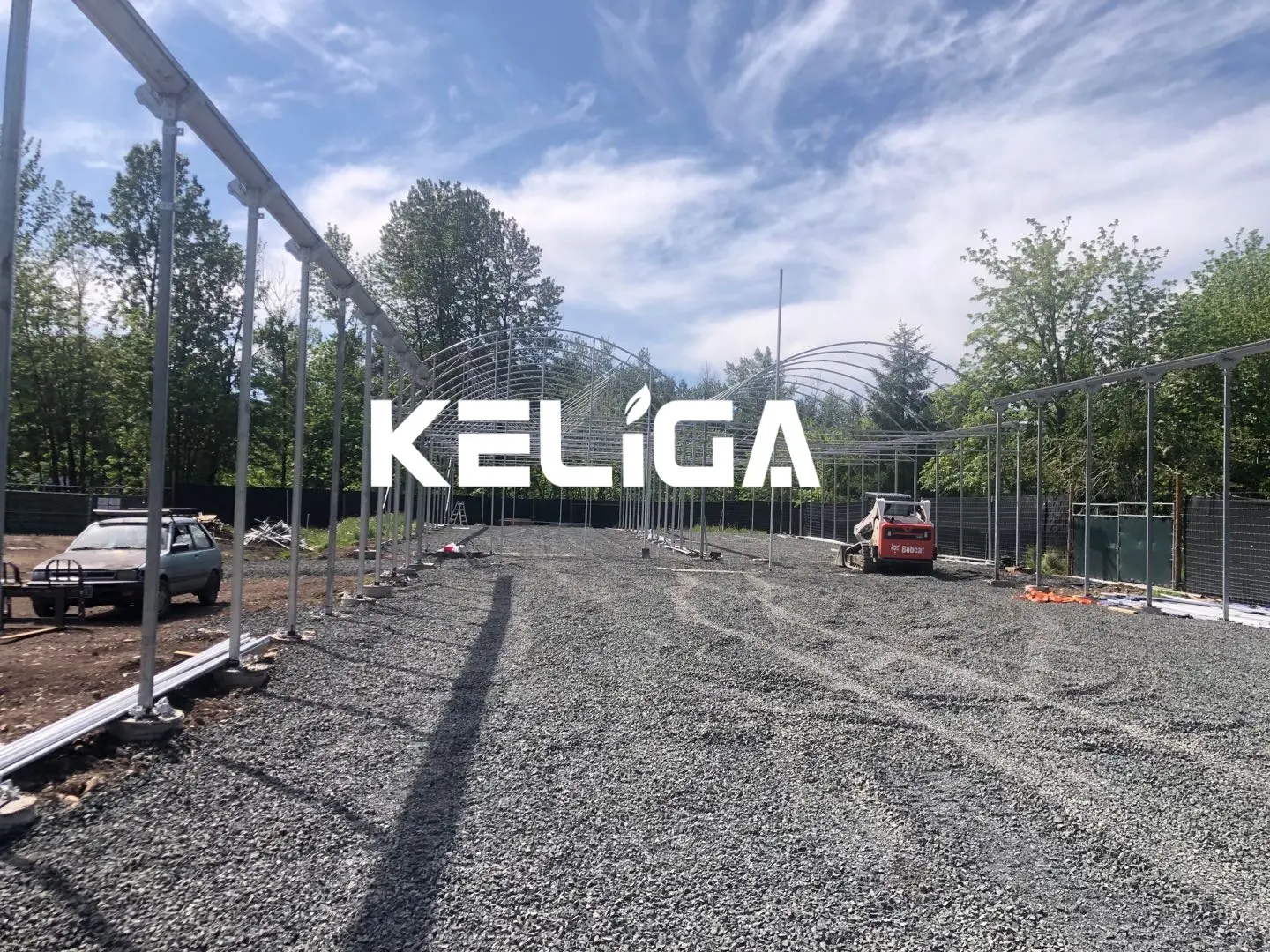
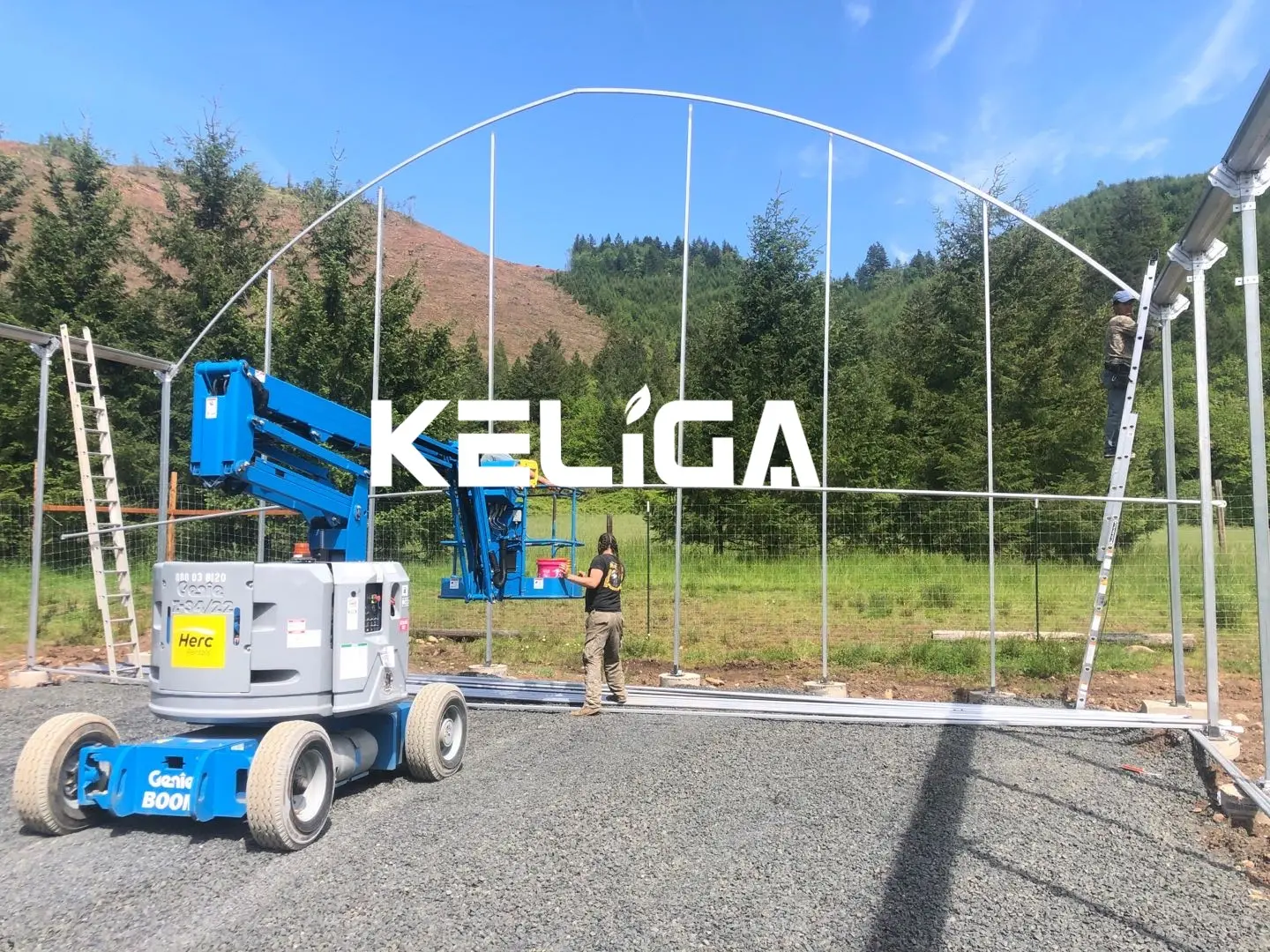
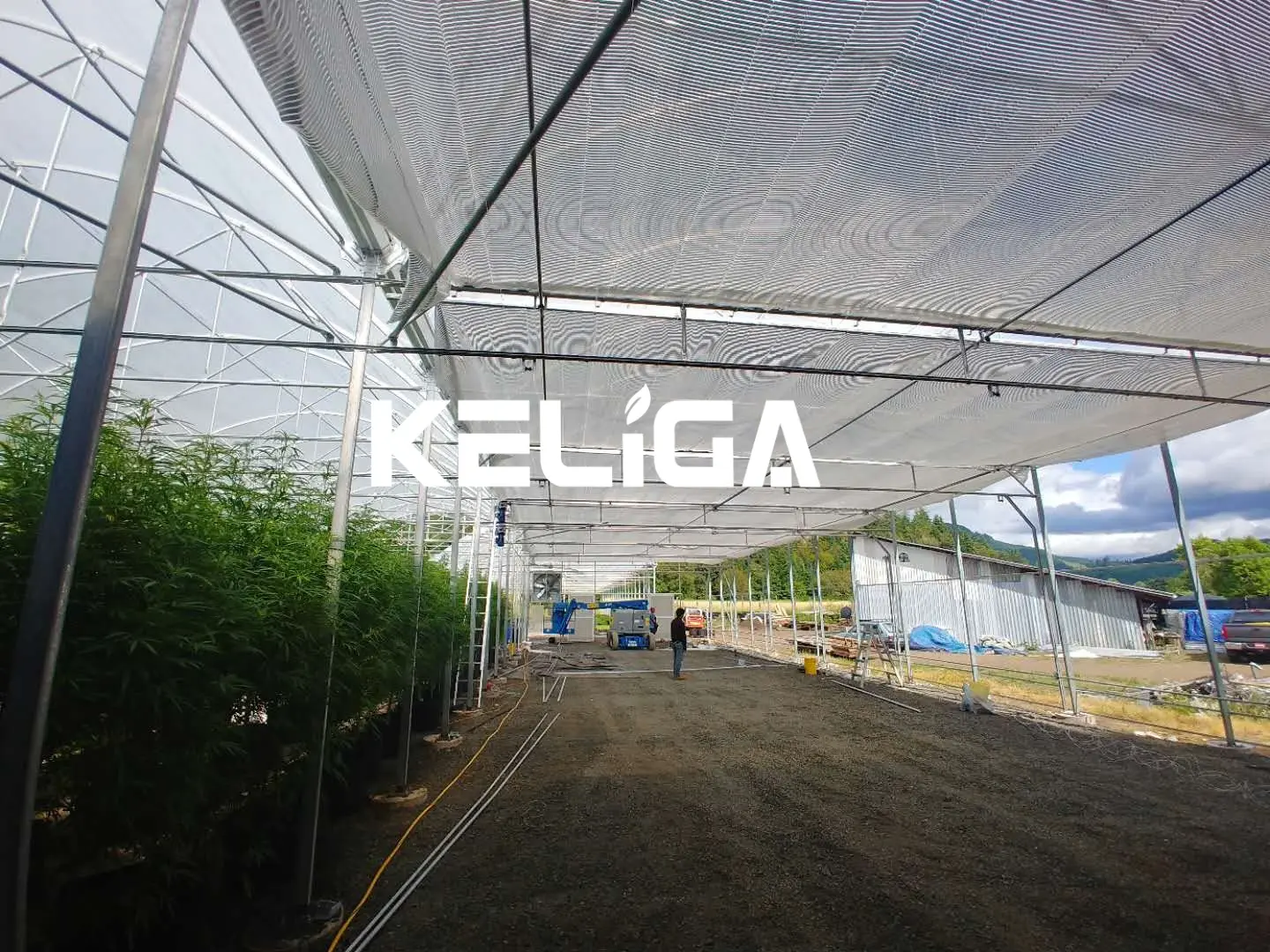
This turnkey package includes two identical gutter‑connected (multi‑span) plastic film light deprivation greenhouses, each measuring 18 meters wide × 40 meters long (720 m² per unit, 1,440 m² total). Designed specifically for commercial cannabis cultivation, the combination of plastic film cladding and automated light deprivation delivers the lowest cost‑per‑square‑meter of any fully blackout‑capable greenhouse while maintaining precise photoperiod control essential for high‑THC / high‑CBD flower production.
Why Gutter‑Connected? Why 18m × 40m? Why Two Units?
Gutter‑Connected (Multi‑Span) Advantages
No wasted space – Gutters collect rainwater and join spans seamlessly, eliminating access aisles between houses. Land use efficiency > 95%.
Uniform internal climate – Large open interior (18m wide, no interior posts blocking airflow or light distribution).
Single blackout curtain – One continuous curtain covers the entire 720 m² span, ensuring zero light leaks.
Lower cost per m² – Shared gutters, fewer foundations, and common end walls reduce construction cost by 20‑30% compared to multiple single‑span houses.
Why 18m Width × 40m Length?
| Dimension | Benefit for Cannabis |
|---|---|
| 18m span | Wide enough to install 6‑8 double rows of cannabis plants (standard row spacing 1.8‑2.4m). No central columns to obstruct light or labor movement. |
| 40m length | Manageable for manual or mechanized harvesting. Allows zoning into two 20m halves for staggered planting cycles. |
| Eave height 4.5‑5.0m | Tall enough for 1.5‑2.0m cannabis plants + overhead blackout curtain + circulation fans + LED supplement lights (if installed). |
| Ridge height 6.0‑6.5m | Provides natural stack ventilation when blackout curtain is open. |
Why Two Separate 720 m² Units Instead of One Large 1,440 m² House?
| Operational Advantage | Explanation |
|---|---|
| Independent photoperiods | One unit can run 12/12 (flowering) while the other runs 18/6 (vegetative). Continuous harvest every 4‑6 weeks, not all at once. |
| Disease isolation | If one unit develops powdery mildew or botrytis, the other remains sealed and protected. |
| Staggered staffing | Harvest, pruning, and planting tasks spread across two units – no labour peaks. |
| Redundant production | A failure in one greenhouse (film tear, actuator fault) does not stop all production. |
| Scalable expansion | Add two more identical 18×40 units later without redesigning any system. |
Why Plastic Film for Cannabis Cultivation?
Most cannabis growers assume polycarbonate or glass is superior. For light deprivation greenhouses, plastic film offers unique advantages that directly impact profitability.
1. Lowest Initial Investment – Faster ROI
| Covering Material | Cost per m² (materials + installation) | Typical Payback Period for Cannabis |
|---|---|---|
| Polycarbonate (8‑10mm twin‑wall) | High (reference) | 18‑24 months |
| Glass (4mm tempered) | Very high | 24‑36 months |
| Plastic film (200‑220µ UV‑stabilized) | 30‑50% lower | 8‑14 months |
For a 1,440 m² project, plastic film saves €15,000‑30,000 in upfront capital – money that can be spent on climate control, irrigation, or genetics.
2. Higher Light Transmission – More Photosynthesis
| Material | Light Transmission (new) | After 2 years |
|---|---|---|
| Plastic film (clear, diffused) | 88‑92% | 85‑88% |
| Polycarbonate twin‑wall | 80‑85% | 78‑82% |
| Glass (single pane) | 90‑91% | 90% (but with glare) |
Every 1% extra light translates to approximately 1% higher yield in cannabis flower production.
Plastic film‘s 88‑92% transmission vs polycarbonate‘s 80‑85% means 8‑12% more usable PAR light reaching the canopy – directly increasing THC percentage and dry flower weight.
3. Diffused Light – No Hot Spots, Deeper Canopy Penetration
Plastic film can be manufactured with light diffusion additives (haze factor 30‑60%). Diffused light scatters as it enters the greenhouse, eliminating focused “hot spots” that burn top colas. Diffused light also penetrates deeper into the lower canopy – critical for cannabis plants grown at 1.5‑2.0m height, where lower branches would otherwise receive minimal direct sunlight.
Result: More “popcorn” buds become marketable, increasing total yield per plant by 10‑15% compared to clear glass or polycarbonate with specular transmission.
4. Replaceable – Low Maintenance Cost
Plastic film lasts 3‑5 years under full sun exposure.
Replacement film costs only 15‑20% of the original greenhouse price.
Polycarbonate yellows and becomes brittle after 8‑12 years; replacement cost is almost as high as the original.
For cannabis growers who frequently modify layouts (changing row spacing, trellis height), film houses are easier to disassemble and modify.
5. Thermal Performance – “Good Enough” with Light Deprivation
Cannabis does not require extreme winter heating. The vegetative state tolerates 18‑25°C; flowering prefers 20‑26°C. Plastic film with a thermal anti‑drip additive (infrared retention) holds enough heat overnight in temperate climates. When the blackout curtain is closed at night, the curtain itself acts as an insulating layer, trapping warm air inside. For cold climates, a second inner film (air‑inflated double layer) can be added, achieving insulation close to polycarbonate at a fraction of the cost.
6. Stealth and Security – Less Visible from Outside
Plastic film, when combined with a white external shade curtain (often deployed during daylight to control light intensity), renders the greenhouse interior invisible from above (drones, aircraft).
Polycarbonate and glass are more reflective and easier to spot from the air.
For regions where cannabis cultivation requires discretion, a film‑covered greenhouse with closed blackout curtains reveals no visual clues of what grows inside.
Light Deprivation System – The Heart of Cannabis Flowering
Cannabis is a short‑day plant: it initiates flowering only when the uninterrupted dark period exceeds a critical length (typically 10‑12 hours of complete darkness). The light deprivation (blackout) system creates this darkness on demand, independent of the natural season.
How It Works in This 18×40 Greenhouse
| Component | Specification |
|---|---|
| Blackout curtain fabric | Double‑layer woven polyester – white reflective outer / opaque black inner / optional white inner liner |
| Opacity | 99.9% – zero light leakage (<0.01 lux at plant level during full sun) |
| Actuation | Motorized rack‑and‑pinion or cable drive system |
| Operation speed | Fully closes or opens a 720 m² bay in 4‑6 minutes |
| Sealing | Side seals (brush seals or inflatable tubes) + overlap joints between curtain panels |
Why Light Deprivation Is Non‑Negotiable for Cannabis
Predictable flowering trigger – No waiting for autumn. Start flowering any week of the year.
Uniform flowering – Every plant receives identical dark period, reducing variation in harvest timing and cannabinoid profiles.
Shorter crop cycles – From seed/clone to harvest in 10‑14 weeks (2‑3 weeks vegetative, 8‑10 weeks flowering) instead of 4‑5 months outdoor.
Multiple harvests per year – Run 3‑5 complete cycles annually from the same growing area.
Premium quality – Controlled photoperiod produces denser buds, higher terpene concentration, and more consistent potency.
Two Units = Perpetual Harvest
With two independent 18×40 greenhouses, you can run a perpetual production schedule:
| Unit | Light Schedule | Stage | Harvest frequency |
|---|---|---|---|
| Unit A | 18 hours light / 6 hours dark | Vegetative (weeks 1‑3) | – |
| Unit A | 12 hours light / 12 hours dark | Flowering (weeks 4‑12) | Harvest every 8‑10 weeks |
| Unit B | Offset by 4 weeks | Staggered flowering | Harvest every 4‑5 weeks from combined output |
Result: Continuous supply of fresh flower to market, not a single bulk harvest that depresses prices.
Complete Climate Control Systems (Integrated)
In addition to light deprivation, each 18×40 greenhouse includes:
1. Shading System
External shade curtain (reflective silver mesh, 60‑75% shading)
Deploys automatically when light intensity exceeds 700‑800 µmol/m²/s – prevents photoinhibition and heat stress
Also conceals internal activity from external view
2. Ventilation System
Continuous ridge vents (30% of roof area) – motorized rack‑and‑pinion
Roll‑up sidewalls (1.8m height on both sides) – motorized
Combined with natural cross‑ventilation, achieves 10‑15 air changes per hour – removes hot, humid air and replenishes CO₂
3. Circulation System
Horizontal airflow (HAF) fans – 12‑16 fans per 720 m² unit (0.3‑0.5 m/s air movement)
Prevents temperature stratification and humidity pockets under the closed blackout curtain – critical for avoiding Botrytis (bud rot)
Even when dark, fans run continuously to keep leaves dry
4. Drip Irrigation & Fertigation
Drip tape with 20‑30 cm emitter spacing
Fertigation injector (venturi or electric diaphragm pump)
Programmable timer – up to 12 cycles per day
90%+ water efficiency; no foliar wetting that promotes mold
Plastic Film + Light Deprivation: Unique Advantages for Cannabis Summarized
| Advantage | Why It Matters for Cannabis |
|---|---|
| Lowest start‑up cost | More capital for genetics, HVAC, security, or licenses |
| Highest light transmission | More PAR light → higher THC and yield |
| Diffused light | Deeper canopy penetration → more marketable bud sites |
| Replaceable film | Low long‑term maintenance; easy to modify layout |
| Stealth | White external shade + blackout curtain hides crop from aerial view |
| Fast ROI | 3‑5 harvests per year at premium indoor‑equivalent quality but outdoor‑like cost |
| Two independent units | Perpetual harvest, disease isolation, labor smoothing |
Technical Specifications – 2 Units of 18×40 Gutter‑Connected Plastic Film Light Deprivation Greenhouse
| Parameter | Specification |
|---|---|
| Number of units | 2 |
| Dimensions per unit | 18m (W) × 40m (L) |
| Area per unit | 720 m² |
| Total area | 1,440 m² |
| Span configuration | Gutter‑connected – 2 spans of 9.0m each or 3 spans of 6.0m each (option) |
| Eave height | 4.5m (customizable to 5.0m) |
| Ridge height | 6.0m – 6.5m |
| Column spacing | 4.0m |
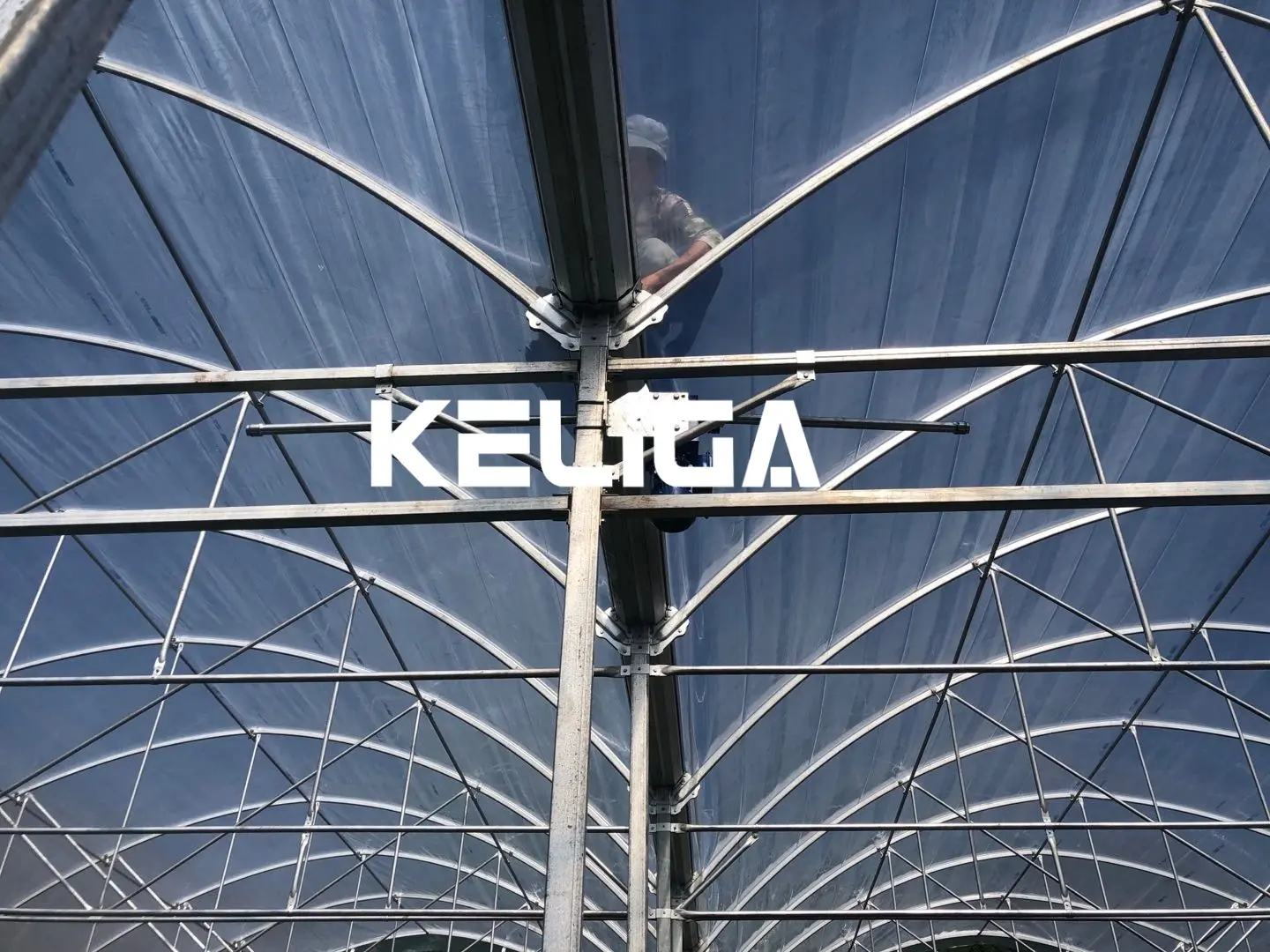
| Frame material | Hot‑dip galvanized steel Q235B, 275g/m² zinc coating |
| Outer covering | 200µ UV‑stabilized polyethylene film, 3‑5 year life |
| Light transmission (new film) | 90% clear / 88% diffused |
| Blackout curtain | Double‑layer opaque fabric, 99.9% light seal, motorized rack‑and‑pinion |
| Shade curtain | External reflective silver mesh, 65% shading, motorized |
| Roof vents | Continuous ridge vent (30% roof area), motorized |
| Sidewall vents | Roll‑up film, 1.8m height both sides, motorized |
| Circulation fans | 14 HAF fans per unit (total 28 fans) – 0.3‑0.5 m/s |
| Wind load design | 0.40 kN/m² (90 km/h) – upgradeable to 0.55 kN/m² |
| Snow load design | 0.35 kN/m² (35 kg/m²) – upgradeable to 0.50 kN/m² |
| Control system | Central PLC controller, independent scheduling for each unit, remote monitoring via app |
| Power supply | 380V / 220V three‑phase (adaptable to local grid) |
| Foundation | Concrete pad footings + perimeter grade beam |
| Assembly | Bolt‑together – no welding required |
| Warranty | Frame 10 years, film 3 years, electrical 1 year |
Expected Production Output for Cannabis (Example)
| Parameter | Per 720 m² Unit (100 m² actual canopy after aisles) | Two Units Combined |
|---|---|---|
| Number of plants | 1,000‑1,200 (SOG method, 4 plants/m²) | 2,000‑2,400 |
| Dry flower yield per cycle | 40‑60 kg (assuming 400‑600 g/m² canopy) | 80‑120 kg |
| Cycles per year | 4‑5 | 4‑5 |
| Annual dry flower production | 160‑300 kg | 320‑600 kg |
| Wholesale value (€5‑8/g) | €800k‑2.4M per unit | €1.6M‑4.8M total |
Actual yields vary by genetics, growing skill, and local regulations.
Why Choose Plastic Film Over Polycarbonate for This 1,440 m² Cannabis Project?
Simple math: For the same total investment as a polycarbonate greenhouse of 1,440 m², you can build two plastic film units of 1,440 m² each (double the area). Or, with a fixed budget, plastic film allows you to allocate more funds to high‑priority cannabis infrastructure: dehumidifiers, CO₂ enrichment, security systems, and compliance monitoring.
Plastic film is not a “budget compromise.” It is a strategic choice for growers who understand that:
Light quantity matters more than insulation in most cannabis climates
Lower capital cost enables faster scaling
Replaceable film allows future upgrades (e.g., switching to diffused film with specific spectrum additives)
Two independent greenhouses provide operational flexibility no single large house can match
Conclusion – The Right Tool for Perpetual Cannabis Harvest
The 2 × (18m × 40m) gutter‑connected plastic film light deprivation greenhouse delivers:
✅ 1,440 m² of blackout‑capable growing space at 50% lower cost than polycarbonate
✅ 88‑92% light transmission – more PAR for higher THC and yield
✅ Two independent units – perpetual harvest, disease isolation, and labor efficiency
✅ Full automation – blackout, shade, ventilation, circulation, irrigation
✅ Fast 8‑14 month ROI – 4‑5 harvests per year at indoor‑comparable quality
R&D Focus Areas
We focus on several core R&D areas, dedicated to solving key direction challenges in the energy storage sector.
Our Process
Steps to Your Greenhouse
1. Consult
We begin with a personalized consultation to capture your vision and needs.
2. Design
Our experts craft a detailed plan with eco-friendly practices for your approval.
3. Execute
Our skilled team transforms your space with precision and care.
The Goal
Our Mission
To transform outdoor spaces into beautiful, functional, and sustainable environments that enhance our clients’ lifestyles while respecting the natural world. We are committed to delivering exceptional service and innovative solutions through our passion for gardening and landscaping.
The Outlook
Our Vission
To be the leading provider of eco-friendly gardening and landscaping services, inspiring communities to embrace sustainable practices and appreciate the beauty of nature in their everyday lives. We envision a future where every outdoor space reflects harmony between human creativity and the natural environment.